|
| Torâh | Haphtârâh | Âmar Ribi Yᵊhoshua | Mᵊnorat ha-Maor |
|---|---|---|---|

Bᵊ-Mi•dᵊbarꞋ 11.1: "So the עַם were complaining, which was bad in the Ears of
The expectation is rampant that, in return for loving
Not only is that contrary to תּוֹרָה, which requires doing one's utmost to adhere to תּוֹרָה, when that idyllic scene is shattered by the reality of life's wildernesses, however, the true feelings and doubts of many surface.
We live in a generation in which everyone from Hollywood to social 'scientists' see the world from a nihilist, hedonist, "me" orientation; supplanting morality with relativism. Yet, these same simpletons are baffled when pedophile priests, with the same "me" orientation, see themselves as no worse than adulterers or homosexuals – whom society approves. Parents who murder their children (amidst divorces and "honor" killings) see themselves as no worse than, indeed superior to, abortionists – whom society approves. Hollywood and the media desensitize society to perversity, which, in turn, internalizes perverseness in a downward spiral that seems to have no fail-safe brake or reverse – until utter destruction.
Nearly every day, I'm besieged with people who claim to "love the Lord." Yet, actually doing what
What did RibꞋi Yᵊho•shuꞋa say about those who teach or practice this hypocrisy? Just listen:
The Nᵊtzârim Reconstruction of Hebrew Matitᵊyâhu (NHM, in English)
"Take heed against false nᵊviy•imꞋ who come to you in wool like sheep, but inside they are wolves who extort. You shall recognize them by their Ma•as•ëhꞋ. Do men pick grapes from a stinging-nettle? Or figs from a thistle? So, every green fruit-tree produces good fruit while a dried-up tree is unable to produce good fruit.
Every tree that isn't producing good fruit is cut out and thrown into the fire. Wherefore, by their fruits, in other words by their Ma•as•ëhꞋ, you shall recognize them. Not everyone saying Adoni to me will enter the Realm of the heavens. Rather, he who does the wish of my Father, Who is in the heavens, shall enter into the Realm of the heavens.
In that day, many will say to me 'Adoni, Adoni, didn't we prophesy in your name? Didn't we throw out demonic-forces in your name? Didn't we do many signs for your name?' Then I will attest to them, 'I never knew you! (Tᵊhil•imꞋ 6.9) 'Turn aside from me all doers of crookedness!'" (NHM
7.15-23).
Those who claim to "love the Lord" while, in fact, rejecting the תּוֹרָה of
 |
 |
This week's pâ•râsh•âhꞋ covers several FAQs.
11.24-25: Then Mosh•ëhꞋ went forth and spoke the speakings of
וַיִּתְנַבְּאוּ וְלֹא יָסָפוּ:
 |
 |
Here is the first Beit-Din ha-Ja•dolꞋ, corrupted centuries later by Hellenist
Smaller, regional, Bat•eiꞋ-Din were established under the jurisdiction of the Beit-Din ha-Ja•dolꞋ, and (regular) Bat•eiꞋ-Din for each and every community were then established under the jurisdictions of the various regional Bat•eiꞋ-Din. Thus, the various communities of
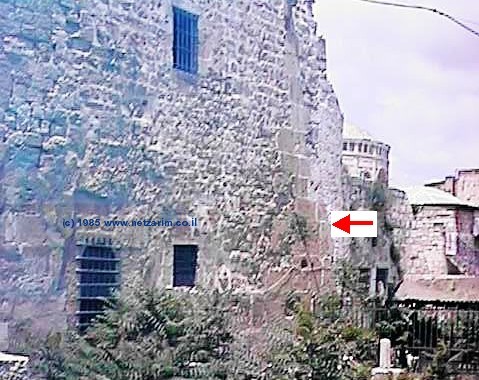 |
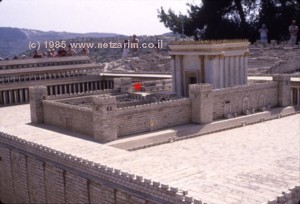
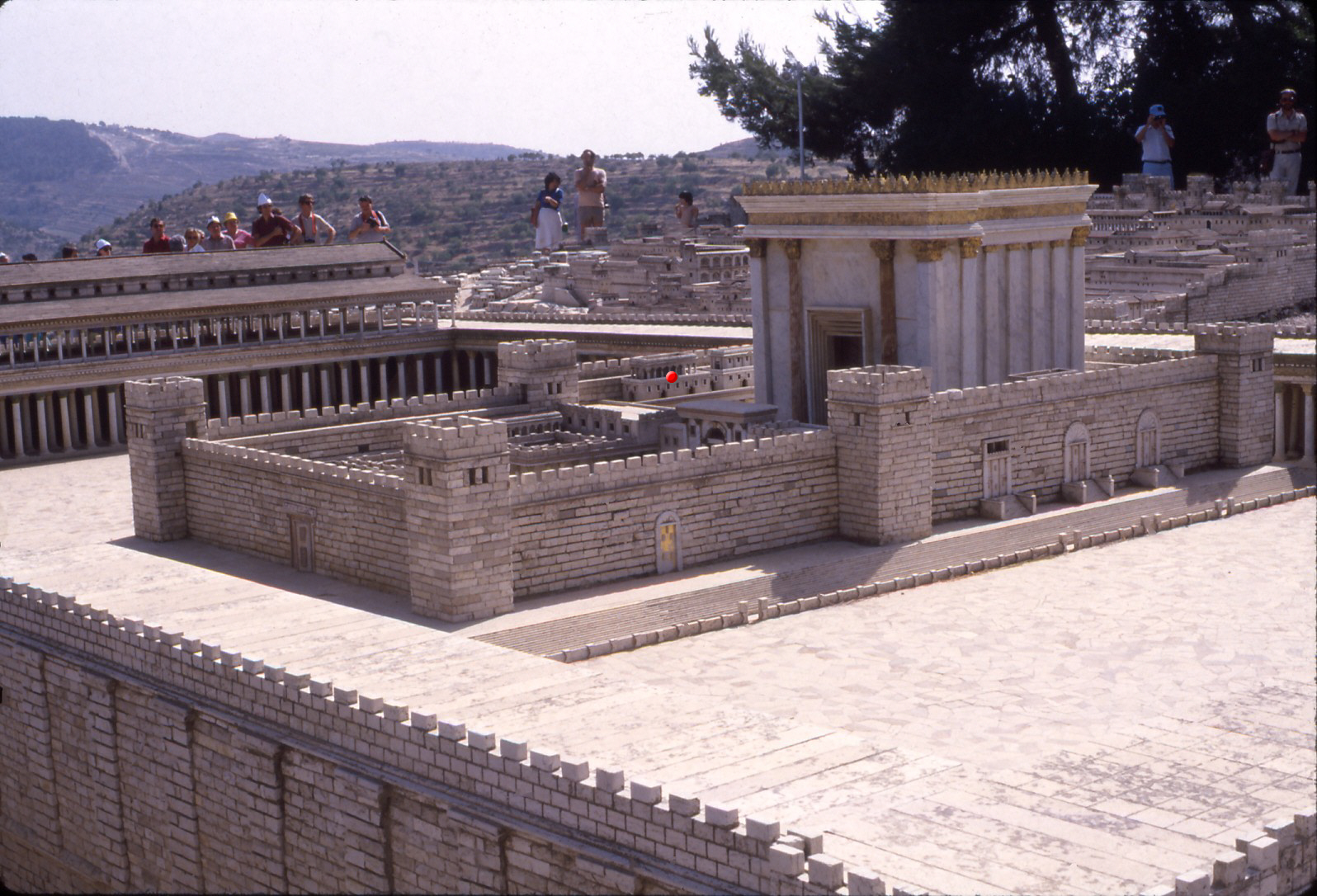
| Beit ha-KᵊnësꞋët built on ruins of Original Beit ha-KᵊnësꞋët ha-Nᵊtzâr•imꞋ, on Har Tziy•onꞋ in Yᵊrushâlayim. Photo © 1985 by Yi•rᵊmᵊyâhꞋu Bën-Dâ•widꞋ |
Every
Hardly a week goes by that someone doesn't manage to miss the conspicuous implications: there is no other group—anywhere on the planet—within the same Jesus (irrespective of what name you call it) and of the "synagogue" described in Rev. 2.9 & 3.9.
|
|
10.31 – וַיֹּאמֶר אַל-נָא תַּעֲזֹב אֹתָנוּ;
Because of the centuries of persecutions by the Church against "Judaizers," and the injuries caused by informers, particularly those in the disguise of Jews who converted through subterfuge, many rabbis have deep skepticism toward proselytes. The dictum today is that a rabbi must, at least twice, discourage anyone inquiring about converting to Judaism.
But we see that this was not the original ע"ד, viz., ע"ד instructed by MoshꞋëh at Har Sin•aiꞋ before Christian missionaries and pogroms. Exactly the opposite, in pâ•suqꞋ 29, MoshꞋëh invited his father-in-law to join Israel. After Kho•vâvꞋ declines (pâ•suqꞋ 30), MoshꞋëh entreats him (pâ•suqꞋ 31) not to abandon Israel.
10.35-36 are the pᵊsuq•imꞋ that Nᵊtzâr•imꞋ will recognize from every תּוֹרָה service.
|
|
8.2— Toward the front of the face of the Mᵊnor•âhꞋ shall illuminate the seven oil-lamps. (I.e., the seven oil-lamps shall illuminate the front of the face of the Mᵊnor•âhꞋ.)
Probably the earliest commentator on the symbolism of the Mᵊnor•âhꞋ was Zᵊkhar•yâhꞋ Bën-Bë•rëkh•yâhꞋ Bën-Id•oꞋ ha-Nâ•viꞋ—this week's Haphtâr•âhꞋ.
|
|
תַּבְנִית, based on the premise that elements of earthly Judaism are patterned after their spiritual counterparts in the non-dimensional Domain (i.e., spiritual realm, the "kingdom of the heavens"), has been discussed in previous commentaries (pâ•râsh•atꞋ Tᵊrum•âhꞋ, 1995.02; pâ•râsh•atꞋ Khuq•atꞋ-, 95.07; and pâ•râsh•atꞋ Sho•phᵊt•imꞋ, 1995.09).
The phrase in bᵊ-Mi•dᵊbarꞋ 8.4, which is popularly mistranslated as "according to the pattern" is
כַּמַּרְאֶה,
אֲשֶׁר
הֶרְאָה
תַּבְנִית is not found in this pâ•suqꞋ.
Since translating this as "pattern" is an anomaly in the Ta•na"khꞋ, it must be dismissed as a valid translation. The same term is found in Yᵊsha•yâhꞋu 52.14 that's translated as "visage," and in 53.2 as "beauty." It's almost as if English translators have deliberately sought to disconnect the linguistic connection, to throw readers 'off the scent' of truth. Further, this is the same term Yᵊkhëz•qeilꞋ ha-Nâ•viꞋ uses to describe the sight (appearance) of the self-moving-things that he (therefore) describes in his vision as living beings (1.5, 13, 14, 16, et al.).
Nevertheless, after the correction the pâ•suqꞋ still retains the connotation implying a תַּבְנִית, implicitly rather than explicitly: "according to the sight (or vision) which
|
|
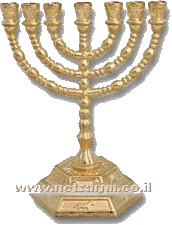 |
מְנוֹרָה |
This pâ•râsh•âhꞋ begins
וַיְדַבֵּר
This passage is recited by the קָהָל as the  symbols . Some scholars believe these may be instructions for blowing the
Before accidentally profaning the Name, readers should become aware not to utter the tetragrammaton (see my paper, Profaning the Holy Name Unawares). With that caveat, it is interesting to note, in investigating the first word of this passage – וַיְהִי, that the tetragrammaton blends two cognates, הֹוָה and יְהַוֶּה This portmanteau emphasizes the simultaneity of these two meta-gender and interspacial facets relative to time, not lending itself to a sound byte in English. The sense of the Name is, "I fem. am," + "He will become" = "is" (i.e. both genders and times merged in the 'now'). Probably, few have noticed that the English translation, "I am," is in the feminine gender!
Incorporating these facets, inherent in the Name
10.35 –
וַיְהִי,
בִּנְסֹעַ
הָאָרֹן,
וַיֹּאמֶר
מֹשֶׁה;
36 קוּמָה |
|
|
 |
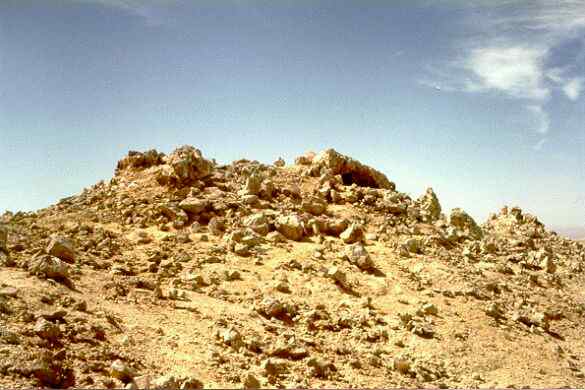 Har Sin•aiꞋ (Har Kar• |
bᵊ-Mi•dᵊbarꞋ orders the mi•tzᵊw•âhꞋ that the גֵּר shall also observe פֶּסַח, "according to the חֻקָּה of פֶּסַח and according to its mi•shᵊpât•imꞋ ( = Ha•lâkh•âhꞋ). So there shall be one חֻקָּה for you, both for the גֵּר and for the citizen of hâ-ÂꞋrëtz" (cf. also
bᵊ-Mi•dᵊbarꞋ 10.12 describes Yi•sᵊr•â•eilꞋ's journey ממדבר סיני (mi-Mi•dᵊbarꞋ Sin•aiꞋ; from the Arid-badlands of Sin•aiꞋ) "and the cloud ישכן (yishkan; neighbored—note the linguistic connection to Mi•shᵊkânꞋ) במדבר פארן (Midbâr pârân; in the Wilderness of pârân). Har Karkom is in Midbâr pârân (click on Sinai map, click again to enlarge; see rightmost block, 2nd from top)!
 |
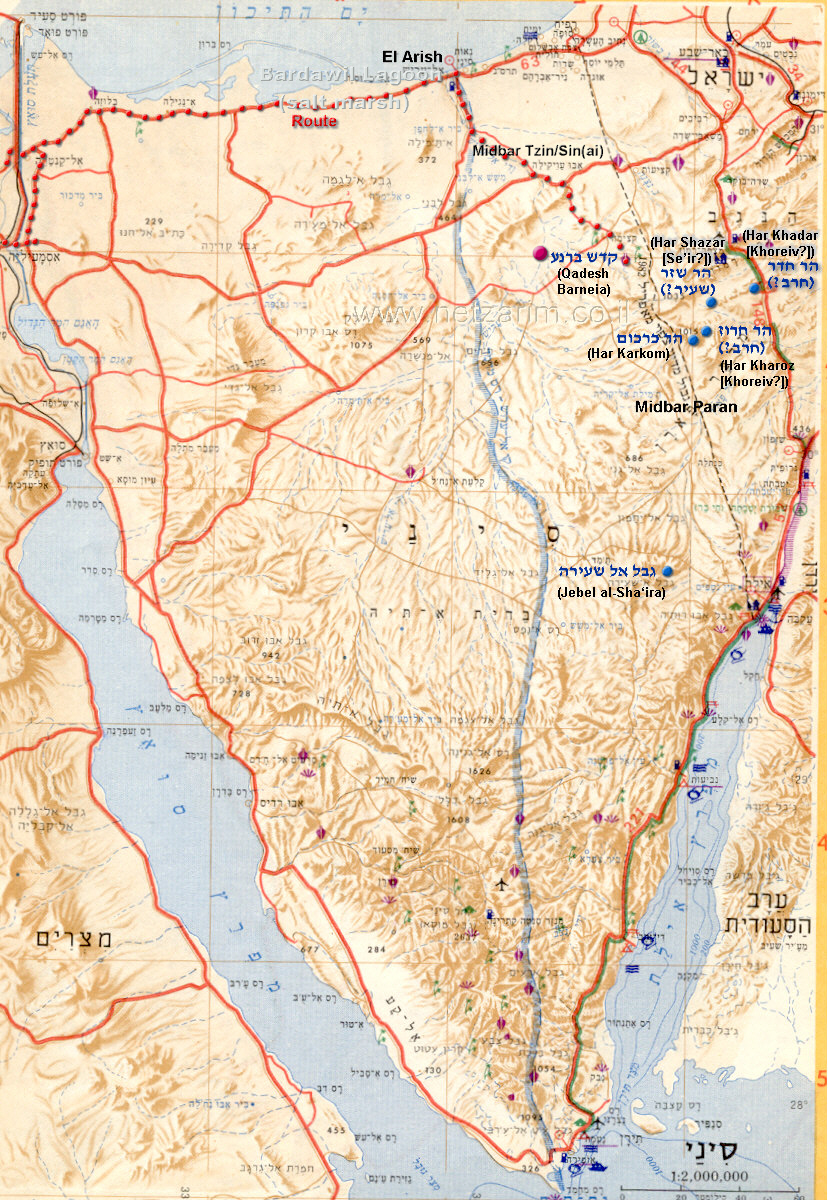 Map: Sin• |
|
|
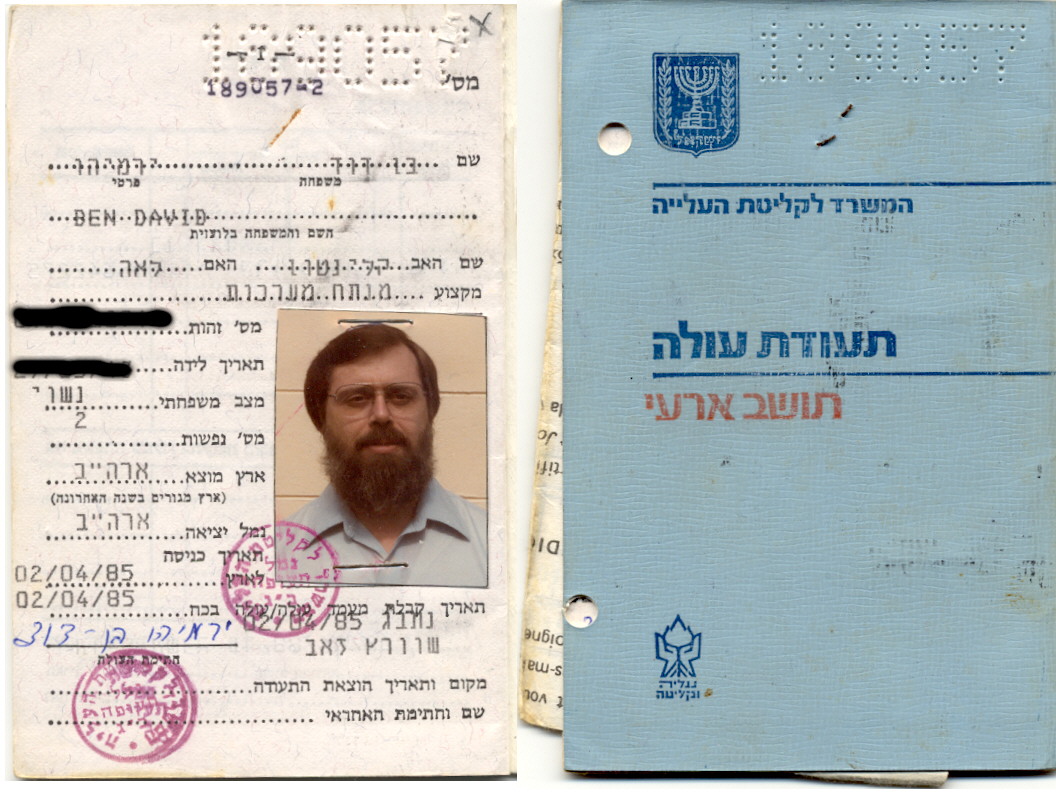 |
| Teudat Olëh – Israeli Certificate of A•liy•âhꞋ Under the Law of Return (1985.04) |
בְּהַעֲלֹתְךָ is derived from the same root as עוֹלֶה and עוֹלָה (one who makes עֲלִיָּה), an ascending or going up; e.g., to
The Pid•yonꞋ ha-BeinꞋ is based on 8.15-19.
Some modern rabbis confuse גֵּר with
|
|
8.1— "In your bringing up of the oil-lamps" is to be understood as 'When you dress / trim the oil-lamps, bringing up the light." This is a dressing of burning oil-Iamps, not a lighting of burned-out lamps. The Mᵊnor•âhꞋ was kept burning perpetually.
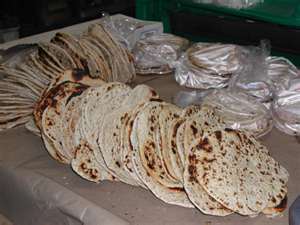 |
| Soft matz•âhꞋ |
9.14— Here the גֵּר who יָגוּר among Jews is instructed to keep פֶּסַח and that there is one חֻקָּה for גֵּר and Jew (cf. also
תּוֹרָה's preference for complete conversion and
the גֵּר (being uncircumcised) is not to eat of the פֶּסַח lamb.
Non-Jews should realize that circumcision in תּוֹרָה means ritual circumcision according to Ha•lâkh•âhꞋ, that is as recognized by
|
|

In 4.1ff we find the description of the Nᵊtzâr•imꞋ logo—two olive trees and the gold Mᵊnor•âhꞋ (the bowl and pipes are too detailed for inclusion in our logo). The symbolism is explained in 4.11ff. The scene described in 3.1-3 cannot refer solely to the contemporary Zᵊru-Ba•vëlꞋ and Yᵊho•shuꞋa Bën-Yᵊhotzâdâq the Ko•heinꞋ ha-Ja•dolꞋ in Zᵊkhar•yâhꞋ's time. Seeing beyond the contemporary Zᵊru-Ba•vëlꞋ and Yᵊho•shuꞋa Bën-Yᵊhotzâdâq of Zᵊkhar•yâhꞋ's time, the two olive trees represent the two Mâ•shiꞋakhs (Mâ•shiꞋakh Bën-Yo•seiphꞋ and Mâ•shiꞋakh Bën-Dâ•widꞋ).
From these two olive trees flow olive oil—symbolizing the רוּחַ הַקֹדֶשׁ—into one bowl. Thus, the olive-oil of the two trees (Mâ•shiꞋakh Bën-Yo•seiphꞋ and Mâ•shiꞋakh Bën-Dâ•widꞋ) merges into one vessel: the single Davidic product of these two, who serves as the Ko•heinꞋ ha-Ja•dolꞋ in the heavens prophesied in Yᵊkhëz•qeilꞋ 34.23-24; 37.24-25; 46.2-12 and 45.16-22. In this heavenly capacity, the resurrected Mâ•shiꞋakh provides olive-oil—symbolizing the רוּחַ הַקֹדֶשׁ—to the Mᵊnor•âhꞋ, which represents the Shab•âtꞋ (seven day) bᵊrit with Israel (Shᵊm•otꞋ 31.16-17).
2.15— וְנִלְווּ many גוֹיִם to
Those who profess to serve RibꞋi Yᵊho•shuꞋa—by whatever name, but are outside of the
 |
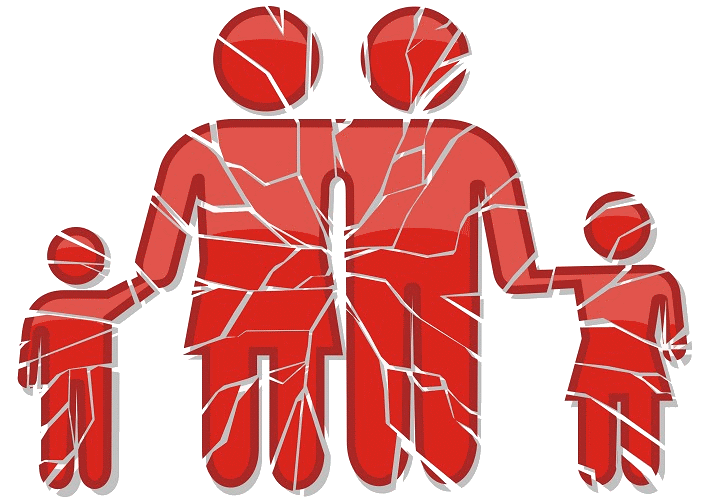 Schisms = a fragmented people |
Another question I'm often asked is: Where is the closest "Nazarene Synagogue"? Think about that. A Beit-Din to adjudicate Nᵊtzâr•imꞋ affairs according to Ha•lâkh•âhꞋ is ordained in Ta•na"khꞋ, but establishing a sectarian "synagogue," to encourage division of Jews in prayer, is something entirely different. The latter is sectarian and serves to introduce schisms into the Jewish community; exactly the opposite of what the Mâ•shiꞋakh is prophesied to accomplish. Establishing a separate "synagogue" is antithetical to the teachings of RibꞋi Yᵊho•shuꞋa.
The more relevant question would be: Where is the closest Beit ha-KᵊnësꞋët where Nᵊtzâr•imꞋ would pray? And the answer to that question is that Nᵊtzâr•imꞋ, when feasible, pray in a local
The other FAQ often posed to us concerns conversion. And the answer is, as we state several times in our web site: we aren't involved in conversions. Which is important to you: following the תּוֹרָה (Instructions) of י--ה? Or a certificate stating that you're a Jew? Many Christian fakes, even Reform Jews, are happy to give you such a certificate. Even asking about conversion often signals that the individual isn't at all interested in becoming non-selectively תּוֹרָה observant, or the commitment of Rut to interface with the Jewish community. Rather, most are insistent that they're "already a spiritual Jew" (in reality a pretend Jew of Rev. 2.19 & 3.19) and presumptuously and arrogantly expect a rubber stamp certification of their self-proclaimed, pretend, "Jewishness" which is intractably alien and contradictory to תּוֹרָה.
In this day and time, most everyone does what seems right in their own eyes—which intractably conflicts with תּוֹרָה's requirement to subordinate one's "own heart and own eyes" to the adjudication of the Beit-Din. The latter, however, is the price of admission to legitimacy in the
|
|
Pâ•suqꞋ 3.1: "Then He showed me Yᵊho•shuꞋa, the Ko•heinꞋ ha-Ja•dolꞋ, standing before a מַלְאָךְ-
"Yᵊho•shuꞋa and Zᵊru-Ba•vëlꞋ are called the two 'בְנֵי-הַיִּצְהָר' who wait upon the •donꞋ of all hâ-ÂꞋrëtz" (Zᵊkhar•yâhꞋ Bën-Bë•rëkh•yâhꞋ Bën-Id•oꞋ ha-Nâ•viꞋ 4.14; ibid.).
As with most, if not all, Messianic prophecies, this had application to current events of the period. As the Artscroll editors note (Stone Ta•na"khꞋ, p. 1408), "The confrontation between Yᵊho•shuꞋa and שָּׂטָן represents the contention between the Jews who were trying to rebuild the [Beit ha-Mi•qᵊdâshꞋ] and the local chieftains, who tried to halt the construction, as described in the fourth chapter of ËꞋzᵊr•â [Radak]."
Yet, in the very next note, the Messianic context is acknowledged. Moreover, it's also clear that it certainly wasn't any mortal Yᵊho•shuꞋa Bën-Yᵊho•tzâ•dâqꞋ who was standing in the heavenly Beit-Din in the presence of the מַלְאָךְ
The editors of EJ acknowledged: "These visions, most of which, despite various interpretations, are obscure, in the main defy interpretation; Yᵊho•shuꞋa and his men are considered 'men that are a token' (Zᵊkhar•yâhꞋ Bën-Bë•rëkh•yâhꞋ Bën-Id•oꞋ ha-Nâ•viꞋ 3.8)" (10.1).
Tal•mudꞋ Bavli makes only one reference to this pâ•suqꞋ (
Indeed, there is only one candidate described in Ta•na"khꞋ who can possibly satisfy all of the prophecies in Ta•na"khꞋ including this description of Yᵊho•shuꞋa who, as the Ko•heinꞋ ha-Ja•dolꞋ, stands in the heavenly Beit-Din representing Yi•sᵊr•â•eilꞋ—the Mâ•shiꞋakh Bën-Dâ•widꞋ.
A more detailed discussion showing the agreement between historical RibꞋi Yᵊho•shuꞋa Bën-Dâ•widꞋ (as contrasted with, lᵊ-hav•dilꞋ, Jesus / Yësh"u) and Ramba"mꞋ concerning the role of the Mâ•shiꞋakh may be found in Who Are The Nᵊtzarim? Live-LinkT (WAN) under the heading: 'I came to complete the תּוֹרָה' (RibꞋi Yᵊho•shuꞋa)—'Repairing the Breaches' (Ramba"mꞋ).
|
|
In this Haphtâr•âhꞋ, the vision of
These two roles are fulfilled in the two missions of the
 |
What at first seems most obvious is actually the most challenging riddle: the symbolism of the seven-branched Mᵊnor•âhꞋ with seven eyes, fed by the olive oil in Zᵊkhar•yâhꞋ 3.9 & 4.10.
One of the earliest extant interpretations—pre-4th century—is also heavily influenced by Christianity: Revelation 1.12-20 of the Christian NT. The author of "Revelations" sees seven branches and seven flames —"stars"—probably more accurately seven suns delineating seven days subsumed in שַׁבָּת—which he clearly equated to the "eyes" of Zᵊkhar•yâhꞋ Bën-Bë•rëkh•yâhꞋ Bën-Id•oꞋ ha-Nâ•viꞋ)—as seven particular (among several other) early Christian churches. By definition, antinomian Churches are intractably incompatible with Dᵊvâr•imꞋ 13.2-6!
 |
| Egyptian |
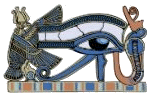
The "eye" theme was almost certainly inspired by the earlier Egyptian Wedjet ("Eye of Horus") and likely incorporated sanitized motifs from sun-worship as well. The more obvious, and likely correct, symbolism, encompassing both שַׁבָּת and the 7 flames atop the
An even later interpretation is found in the Christianized Pseudepigraphal book of Kha•nokhꞋ GiꞋmël (corrupted to 3rd "Enoch"), dated to approximately the 5th century C.E. In Kha•nokhꞋ, עַיִן is related variously to
Time periods, each eye equating to one day or one year) or,
Apparently based on Kha•nokhꞋ 17, to the seven מַלאָכִים of
Interpreting עַיִן properly depends, in turn, upon understanding עֵין הַחַשְׁמַל of the כְּרוּבִים of the מֶרכָּבָה in Yᵊkhëz•qeilꞋ ha-Nâ•viꞋ (1.4,18,27; 8.2; 10.12; et al.).
Not fathoming the symbolisms of the מֶרכָּבָה passages, and fearing the repercussions of wrongly interpreting these passages, the Sages forbade teaching מֶרכָּבָה passages altogether. However, "Duh" (infamous leader of "Heaven's Gate") is yet another in a long string of false prophets who periodically demonstrate the consequences of reverting to the 'Ostrich Syndrome' and fail to teach the general limits and constraints of properly interpreting the מֶרכָּבָה passages.
 |
Aside from the fallacy of 'Occam's Razor' (which misinformed philosophers routinely abbreviate and misrepresent as logic), there is still reason, in this case, to incline toward the most obvious potential answer: the seven days of the week. While equating each עַיִן to a מַלְאָךְ seems to have precedent in the above-cited passages, so does equating seven עַיִן to seven days. Further, there is ancient precedent among the pagans for assigning a certain, though mythical and pagan, מַלְאָךְ—god—to each day of the week:
It shouldn't be surprising that Jews, while eschewing the idolatrous entities, might assign a מַלְאָךְ ha-pân•imꞋ to each day of the week as an עַיִן to function as a heavenly pâ•qidꞋ over Israel responsible for that day, and each assigned their imagined corresponding level of "heaven"—"stars" as described in Revelation, ascending toward Shab•âtꞋ representing the 7th—and highest—heaven.
These מֶרכָּבָה passages are some of the ones often cited by those who wait on desolate mountain tops in the middle of the night to hitch-hike on a UFO, and undoubtedly referred to by "Duh" and his unfortunate followers. Some of the passages can be interpreted as missiles, aircraft, nuclear holocaust, germ and chemical warfare, etc. So why not UFOs? Where did "Heaven's Gate" go wrong?
Theirs is the error of ignorance resulting from selective input (controlled and closed study – only what bolsters their preset ideas) compounded by incompetence in logic (e.g., circular reasoning). Their assertion that the נֶפֶשׁ has quantifiable mass is easily disproven in any hospital having a decent laboratory. They were criminally gullible and logically uncritical. Had they relied on logic instead of "faith," elementary logic would have precluded the next "step" in their "reasoning": that the mass of the massless (!?!) נֶפֶשׁ needed a spaceship as a "moving van" to transfer from one "vehicle" (body) to a "higher level."
The scientific evidence implies that the נֶפֶשׁ is non-dimensional, i.e., pure spirit, as demonstrated, inter alia, by no measurable change in mass at death. Thus, the נֶפֶשׁ, if we grant that it continues to exist (as we do), can only be non-dimensional.
Yes, death can, and should, be viewed as a metamorphosis, a spiritual birth. But where is any reason to think that it will be physical (dimensional)?
To the contrary, there is every reason to conclude that a metamorphoses produces a pure נֶפֶשׁ—the non-dimensional state of our cognition, thoughts and ideas, popularly expressed as the "spiritual" or "heavenly" world.
Of the billions of instances, no authentically "metamorphosed" or "spiritually born" person has ever been observed as having returned into the dimensional (physical) universe. Even granting that the נֶפֶשׁ isn't physical, since they had no control over where they went in spiritual travel (astral projection or what-not) while alive, the victims of "Heaven's Gate" had no justifiable reason to think that their suicide would put them any more in the spiritual driver's seat so that they could go where they wanted.
 |
| Calling the 2nd-4th century Christian-syncretized counterfeit by a Hebrew name doesn't change the idol. The historical 1st century |
Some argue that Yësh"u, after being resurrected from the dead, showed his "divine" mastery over death by appearing in his post-death form. Even aside from rejecting the divinity of Yësh"u, there still remains too much we don't know, that the observers didn't know to ask, or have the technology to check, for our modem benefit.
Accounts of RibꞋi Yᵊho•shuꞋa's death, (by contrast and) by modem technological standards, describe what would almost certainly be called today a "near death experience." Neither do the descriptions of his subsequent appearance provide much information other than he was visible, tangible and that he ate—he was physical. Each of these attributes alone rule out any manifestation of a pure non-dimensional נֶפֶשׁ.
Taken together, this strongly suggests that the idea of a disembodied נֶפֶשׁ reappearing in the dimensional universe, inhabiting another "vehicle,"—and therefore requiring dimensional transportation in a dimensional UFO of the physical universe—is silliness.
Yet, look around you. To what extent to are those around you—and you—relying on irrational "faith" (despite "irrational" being a synonym for "insane") instead of rational logic when it comes to relating to the real and rational Creator of our real and rational universe? To what extent to are those around you—and you—relying on closed studies and circular reasoning to keep you brainwashed in what you've been raised to believe, to the exclusion of all contradictory evidence?
 285x218.gif "Homer Simpson") Beyond the X-Files TV program and rumors of the Roswell Incident there is no scientific credibility for UFOs (UFOs—Insider's Info, as a former USAF Air Intelligence Agency intelligence analyst with Top Secret Crypto Codeword clearance). Unexplained does not imply "flying object" – much less extra-terrestrial space travelers. Unexplained is, uh, unexplained.
 |
Insisting on scientific verification of a UFO shadowing Hale-Bopp would also have kept the suicide victims from voluntarily swigging down their kool-aid. Relying on TV programs, movies and quacks is a sure recipe for disaster. On a number of levels, rational logic rather than irrational "faith" would have prevented the tragedy.
Empirical evidence is total, and contradictory evidence non-existent, corroborating that the נֶפֶשׁ, once separated from the body, can no longer be defined in a dimensional realm, i.e., by dimensional attributes; but only in a non-dimensional (i.e. spiritual) Realm—popularly (though inaccurately) "heaven."
|
|
In the הפטרה, Zᵊkhar•yâhꞋ Bën-Bë•rëkh•yâhꞋ Bën-Id•oꞋ ha-Nâ•viꞋ 2.14, the English "I will dwell" doesn't adequately convey the Hebrew וְשָׁכַנְתִּי
The shorꞋësh of this verb is שָׁכַן and it is from this shorꞋësh that the term שְׁכִינָה derives. "Settled" isn't an accurate rendering of this verb. The more accurate verb for "to settle" in Hebrew is the pi•eilꞋ of יָשַׁב; i.e. יִשֵּׁב
In pâ•suqꞋ 15, the English "nations" conveys the wrong sense. The Hebrew speaks not of לְאֻמִּים but, instead states: וְנִלְווּ many גוֹיִם to
Pâ•suqꞋ 15 continues, וְהָיוּ לִי לְעָם
The context of pâ•suqꞋ 14 demonstrates that "I" refers to
Whle the "I" who is coming and will שָׁכַן "in your midst" in pâ•suqꞋ 14 is identified as
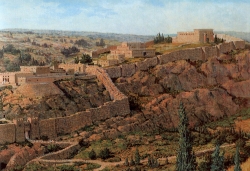 |
 Beit ha- |
Pâ•suqꞋ 15 then says something that should cause surprise: "and you [daughter of Tziy•onꞋ—fem. sing. with pâ•suqꞋ 14] shall know that
Know – not "believe"?!? How? By now, I hope all readers immediately know the answer (Dᵊvâr•imꞋ 13:2-6).
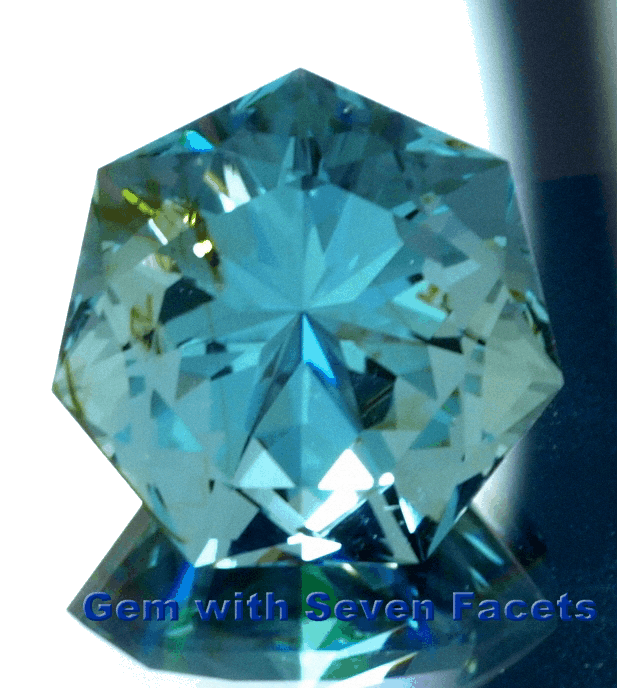 |
| Stone with seven eyes (facets) |
Then Zᵊkhar•yâhꞋ Bën-Bë•rëkh•yâhꞋ Bën-Id•oꞋ ha-Nâ•viꞋ records a very cryptic statement (pâ•suqꞋ 9): " 'For behold הָאֶבֶן that נָתַתִּי before Yᵊho•shuꞋa, on אֶבֶן אַחַת, are שִׁבְעָה עֵינָים; behold מְפַתֵּחַ פִּתֻּחָהּ', proclaims
What are the "שִׁבְעָה עֵינָים" on the "אֶבֶן אַחַת"? Clearly, seven relates to the seven lamps on the Mᵊnor•âhꞋ which, in turn, relates to the seven day week and seventh day Shab•âtꞋ. But how are these "עֵינָים," why seven, and what does that imply the corresponding seven engravings would be?
 470x354.gif "Ancient Numerology (number theory)")
For some astonishing insights we explore ancient mathematics and numerology, all the way back to B.C.E. 6th century Egypt and Pythagoras—prototypical concepts of which MoshꞋëh probably studied growing up in the palace of Tut-Moses II six centuries before that, and Av•râ•hâmꞋ Âv•iꞋnu before him. (See also 70.)
Credited as the father of monotheism, it seems to me that part of Av•râ•hâmꞋ Âv•iꞋnu's fame in this regard must also have been due to his ability to enhance his insights into the implications of a Singularity-Creator by reasoning more profoundly than his peers—mathematically. "In mystical lore, according to John Michell [1988], the natural number 1 was called the monad (origin of all numbers). The dyad 2 was the first feminine number and represented the first stage of creation, the split into the mutually dependent opposites of positive-negative, hot-cold, moist-dry, etc. The number 3, the first masculine number, represented the second stage of creation, the productive union of negative and positive which follows the separation and refinement of these opposite elements. The sum of the first feminine and the first masculine number, 5, represented man, microcosmos, harmony, love, and health, while inanimate life was represented by the number 6.
To derive the meaning of 7 we must first examine in greater depth how some of the lower numbers were derived. The dyad = monad + monad, i.e., creation derived from the One Creator. The triad, 3, derives from the monad + dyad, i.e., the creation of, and distinction betwen, male and female, i.e., sexual reproduction, was created by the Creator in His creation. This begins to form an additive series in which each number, after the monad (the Creator) and dyad (initial creation), begins to sum to the previous two numbers: 1, 1, 2, 3, 5, 8, 13, 21, ' (a Fibonacci series).
We're interested here only in the numbers in this series that lead us to seven. So we can disregard numbers > 7. The last number in this series <= 7 is 2 (creation) + 3 (sexual reproduction), combining to produce 5: man, microcosmos, harmony, love, and health.
The next number in the Fibonacci series, after 5, is 8, the combination of 3 (sexual reproduction) with 5 (man, microcosmos, harmony, love, and health). 8 represents the works of man, what mankind—in contrast to the Monad-Creator—produces.
But, instead of 8, we find that the number
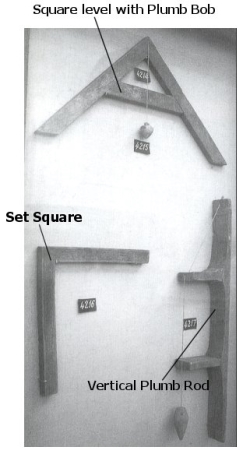 |
| Egyptian Pyramid-era wooden square and plumb bob (Cairo Museum) |
Seven, the bridging of man's world (5) and creation (2), and thence with the Creator (1), was also reflected in a geometric way. "To ancient geometers [mathematicians; ybd], the circle symbolized the unknowable part of the world (since its circumference was proportional to the irrational number π) while the square represented the four points of the compass and winds of the comprehensible world. Squaring a circle was a means of expressing the unknowable, the sacred through the familiar" (Jay Kappraff, Connections, The Geometric Bridge Between Art and Science (New York: McGraw-Hill, 1991), p. 29.)—recall Honi, of the Circle.
"In ancient tradition, the square, by its axial geometry symbolizing the directions of the compass, represented the earth and the dimensions of space while the circle, symbolizing the celestial sphere, represented the realm of the heavens and the dimension of time. Thus, ancient mathematics, architecture, astronomy and music may have been all entwined to form a holistic view of the cosmos an attempt to bring heaven down to earth and replicate it at all scales and to synchronize space and time" (Jay Kappraff, Connections, The Geometric Bridge Between Art and Science (New York: McGraw-Hill, 1991), p. 6.).
We related recent scholars' findings of how the Egyptians did this with hieroglyphics and the placement and type of architecture of their pyramids, based on the BBC documentary: The Great Pyramid, Gateway to the Stars, BBC, 1994.
The only means that the early mathematicians had to "square the circle" was by using a straight edge and compass (for construction, a string tied to a stake), a technique which was regarded as holy and esoteric. In modern times, this technique, which only approximates squaring a circle, has been termed the 'Sacred Cut.' "It was the Danish scholar Tons Brunes who coined the term 'sacred cut'. Brunes claims that the sacred cut was transmitted from Egypt to Greece in the sixth century BC[E] by Pythagoras." (Jay Kappraff, Connections, The Geometric Bridge Between Art and Science (New York: McGraw-Hill, 1991), p. 29.). Excavations show that the key to the design of the Garden Houses of the ancient Roman port of Ostia, near the mouth of the Tiber River, "is a single geometric pattern based on the square and a particular way of dividing it [which] came to be called the sacred cut" (Jay Kappraff, Connections, The Geometric Bridge Between Art and Science (New York: McGraw-Hill, 1991), p. 28.).
Though the descriptive phrase is modern, sacred cut nevertheless reflects ancient thinking. The geometric counterpart of the number 7 ties the concepts together, bridging the gap from man's world (=5 [not unlike the movie The Matrix]) to the Monad-Creator via His creation (=2), totaling 7.
The relationship of this sacred cut to squaring a circle has another aspect—circumcision, this sacred cutting of a circle in our male reproductive organ to mark the bᵊrit of bridging the gap between the physical and the holy! Being required to do it on "Man's-day"—both the eighth and first day—stipulates in no uncertain terms: this bᵊrit of inscribing the circle, of merging the holy with our physical posterity, is to negate the idea that man is the master of nature or the cosmos.
Shab•âtꞋ and the Mᵊnor•âhꞋ—the "seven eyes" of this pâ•suqꞋ in Zᵊkhar•yâhꞋ Bën-Bë•rëkh•yâhꞋ Bën-Id•oꞋ ha-Nâ•viꞋ—all emphasize the number 7, pointing us unmistakably to god and its successor, Yësh"u.)
Historically, Yᵊho•shuꞋa Bën-Yᵊhotzâdâq the Ko•heinꞋ ha-Ja•dolꞋ was a contemporary of Zᵊru-Ba•vëlꞋ (Zᵊkhar•yâhꞋ Bën-Bë•rëkh•yâhꞋ Bën-Id•oꞋ ha-Nâ•viꞋ 6.11). However, the descriptions Zᵊkhar•yâhꞋ Bën-Bë•rëkh•yâhꞋ Bën-Id•oꞋ ha-Nâ•viꞋ gives in this chapter cannot all describe a still-living human.
Moreover, Zᵊkhar•yâhꞋ Bën-Bë•rëkh•yâhꞋ Bën-Id•oꞋ ha-Nâ•viꞋ writes, "שִׁבְעָה עֵינָים" (the #7 representing the bridging of the physical realm with the non-physical, holy, spiritual realm), is in אֶבֶן אַחַת (the Monad, the Creator,
 |
In other words, 7 = Shab•âtꞋ = the bridge (over
In the non-physical – holy, spiritual and eternal – realm, this chapter of Zᵊkhar•yâhꞋ Bën-Bë•rëkh•yâhꞋ Bën-Id•oꞋ ha-Nâ•viꞋ implies that the office and role of the Ko•heinꞋ ha-Ja•dolꞋ, defunct since the destruction of the Beit ha-Miq•dâshꞋ in 70 C.E., is restored in the eternal incorporeal realm as a function of the Mâ•shiꞋ akh Bën-Dâ•widꞋ .
Astonishingly, this is all inherent in the ancient (perhaps somewhat primitive, but the science of their day) number theory of both the bᵊrit of circumcision on the 8th day and in our honoring of the 7th day Shab•âtꞋ.
Since the time of RibꞋi Yᵊho•shuꞋa Bën-Dâ•widꞋ, the only ones who have truly been honoring the Mâ•shiꞋakh of
|
|
This is one of the richest Haphtâr•âhꞋ readings of the year. The description (3.1ff) of Yᵊho•shuꞋa the Ko•heinꞋ ha-Ja•dolꞋ of Zᵊkhar•yâhꞋ Bën-Bë•rëkh•yâhꞋ Bën-Id•oꞋ ha-Nâ•viꞋ 3, who is in the heavens –
3.1 – לִפְנֵי מַלְאַךְ י--ה; וְהַשָּׂטָן, עֹמֵד עַל-יְמִינוׂ לְשִׂטְנוׂ:
taking place in the heavenly Beit Din, is hardly compatible with the human Yᵊho•shuꞋa Bën-Yᵊhotzâdâq of Zᵊkhar•yâhꞋ Bën-Bë•rëkh•yâhꞋ Bën-Id•oꞋ ha-Nâ•viꞋ 6.11. This passage prophesies a future event. Since it is a future, not past, event, however, Christians should note that neither is this compatible with their claimed pre-existent YeshꞋ "u.
What Zᵊkhar•yâhꞋ Bën-Bë•rëkh•yâhꞋ Bën-Id•oꞋ ha-Nâ•viꞋ describes is the Mâ•shiꞋakh who would also be named Yᵊho•shuꞋa. Here, the Mâ•shiꞋakh is prophesied to have a heavenly, eternal, role. Yet, an eternal role contradicts a mortal
The eternal role of the Mâ•shiꞋakh Bën-Dâ•widꞋ is also clearly specified by Yᵊkhëz•qeilꞋ ha-Nâ•viꞋ (37.25). Like Yᵊkhëz•qeilꞋ ha-Nâ•viꞋ, Zᵊkhar•yâhꞋ Bën-Bë•rëkh•yâhꞋ Bën-Id•oꞋ ha-Nâ•viꞋ corroborates that the Mâ•shiꞋakh would assume the role of the Ko•heinꞋ ha-Ja•dolꞋ in the heavenly, spiritual and eternal, Realm. Here, the Mâ•shiꞋakh is called צֶמַח in 3.8—the designation for the Mâ•shiꞋakh corroborated in the Qumrân (Dead Sea) Scrolls.
 |
Moreover, Mikh•âhꞋ describes (5.1) a dual goings-forth (וּמוֹצָאֹתָיו) of the Mâ•shiꞋakh – the Scriptural basis confirmed in Tal•mudꞋ by, inter alia, the duality of the Mâ•shiꞋ akh Bën-Yo•seiphꞋ plus the Mâ•shiꞋ akh Bën-Dâ•widꞋ ! Zᵊkhar•yâhꞋ Bën-Bë•rëkh•yâhꞋ Bën-Id•oꞋ ha-Nâ•viꞋ describes (3.2) the second of these dual goings-forth of the Mâ•shiꞋakh as an אוּד מֻצָּל מֵאֵשׁ.
What בְּגָדִים
צוֹאִים, (3.3) if not the smearing – by Hellenist Roman Christians and Hellenist
Having been rescued from what fire if not the gentile Hellenist conflagration that consumed him and the prophesied יְבַלֵּא (
First, the Mâ•shiꞋakh is pictured in fire [symbolizing the trial of death], then—secondly— rescued. First, Yᵊho•shuꞋa is portrayed in feculent) clothes (בְּגָדִים צוֹאִים, 3.3) [symbolizing the perverting and besmirching of his reputation], then—secondly—cleaned up and given festive clothes. By restoring his true, תּוֹרָה, teachings, returning תּוֹרָה to its pristine supremacy, the Nᵊtzâr•imꞋ "are a-rescuin' the firebrand from the fire" and restoring his clean, festive clothes (pristine, תּוֹרָה-teaching reputation).
The dual role is corroborated and further elaborated in Zᵊkhar•yâhꞋ Bën-Bë•rëkh•yâhꞋ Bën-Id•oꞋ ha-Nâ•viꞋ 4.12-14.
 |
 Getting started learning best we knew at the time, 1980, A•ronꞋ ha-QoꞋ dësh and |
 |
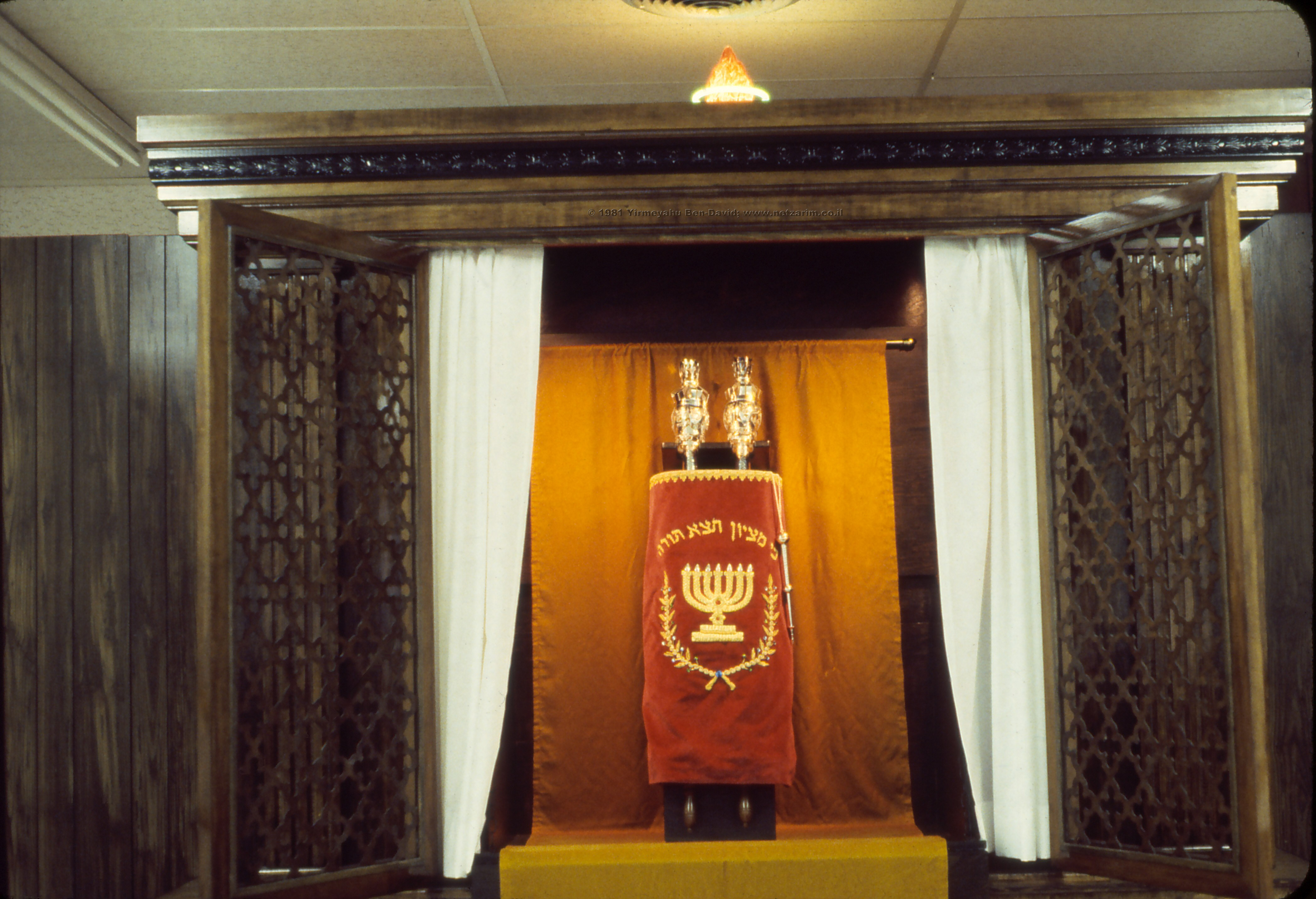 Getting started learning, 1981, תּוֹרָה in A•ronꞋ ha-QoꞋ dësh, ("Beit ha-Natzrim" [sic], Orlando) |
 |
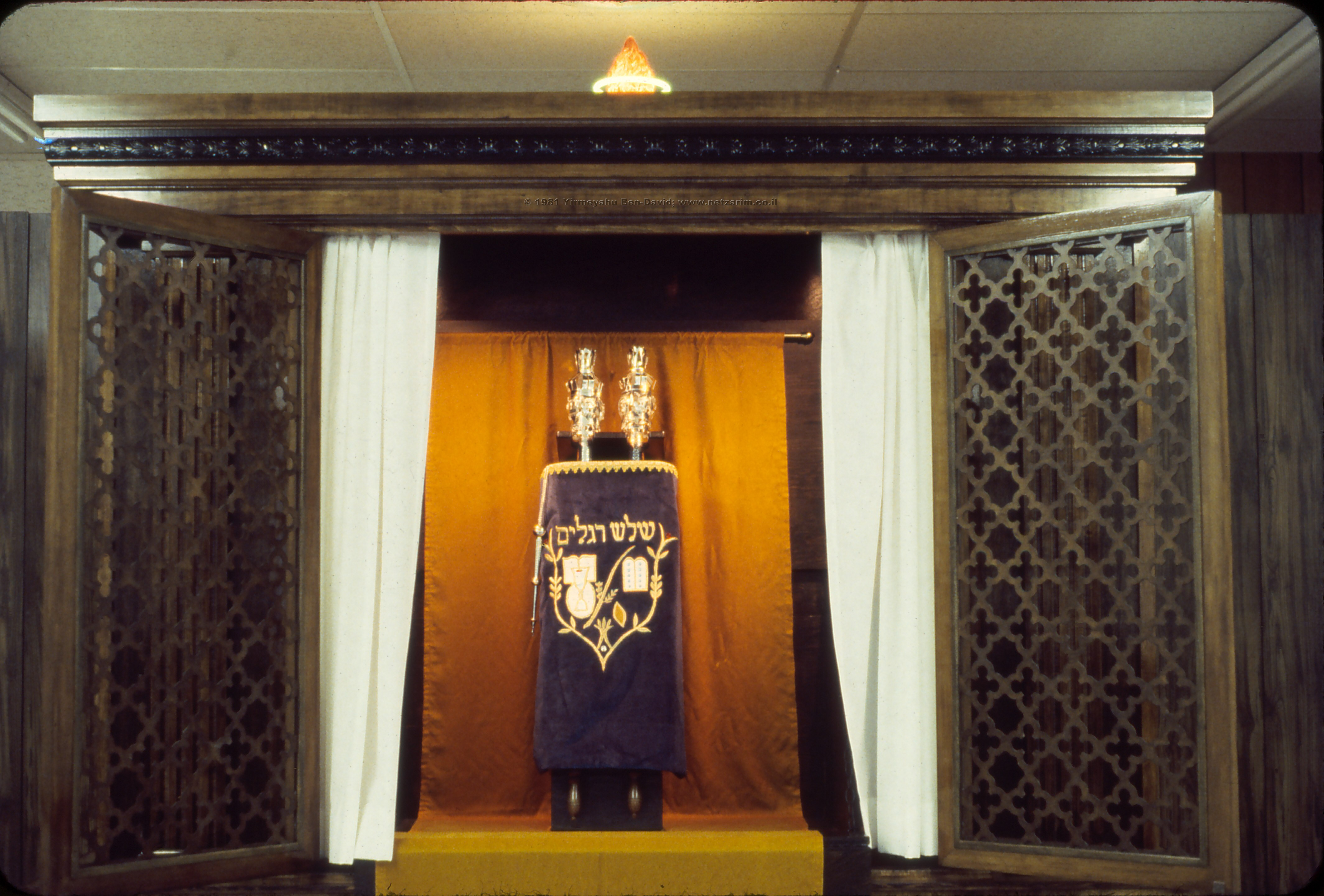 Getting started learning, 1981, תּוֹרָה in Open A•ronꞋ ha-QoꞋ dësh, Khaj•imꞋ cover ("Beit ha-Natzrim" [sic], Orlando) |
The Christian book of "Revelation" (1.20; not Scripture – on par with Josephus, Eusebius, etc.) seems to draw on this Vision of Zᵊkhar•yâhꞋ Bën-Bë•rëkh•yâhꞋ Bën-Id•oꞋ ha-Nâ•viꞋ ch. 4. While the author of Revelation may have used Zᵊkhar•yâhꞋ Bën-Bë•rëkh•yâhꞋ Bën-Id•oꞋ ha-Nâ•viꞋ's vision as an analogy, Revelation stretches credibility to suggest that there were only seven congregations, all of which were located in Turkey, followers of Paul and Hellenist!
Zᵊkhar•yâhꞋ Bën-Bë•rëkh•yâhꞋ Bën-Id•oꞋ ha-Nâ•viꞋ is clear in explaining (3.9) that the seven lamps on the gold Mᵊnor•âhꞋ represent seven facets of a stone, which are (4.10) the eyes of
וְרֵעֶיךָ הַיֹּשְׁבִים לְפָנֶיךָ, כִּי-אַנְשֵׁי מוֹפֵת הֵמָּה;
It's therein implied that these "wondrous-sign, inducer humankind-men" were seven in number, the "seven eyes of
While there is much confusion, perhaps "dispute" is the more accurate word, between the names of the heavens (and even number, some numbering 10) and the names of their respective "archangels" in the Mër•kâv•âhꞋ and Gnostic literature, Kha•nokhꞋ ÂlꞋ ëph 19-20, 40, which E. Isaac dates between the 2nd century BCE – 1st century CE, names these seven—who, the Sages believed, are the מַלאָכִים of the "seven heavens" of Kha•nokhꞋ GiꞋ mël 17:
מיכאל, the מַלְאָךְ of fire [the מַלְאָךְ of forbearance in 40.9] who watches over Yi•sᵊr•â•eilꞋ and leads a force of מַלאָכִים in guarding the 7th, and highest, heaven—called ערבות
גבריאל, the מַלְאָךְ who leads a force of מַלְאָךְ in guarding Gan EidꞋën [the מַלְאָךְ of strength in 40.9], the 6th heaven—called מכון
אוריאל, the מַלְאָךְ who leads a force of מַלאָכִים in guarding the 5th heaven—called מעון
רפאל, the מַלְאָךְ who is in charge of the spirits of humans and leads a force of מַלאָכִים in guarding the 4th heaven—called זבול
רעואל, the מַלְאָךְ who takes revenge for the world and for the persecuted luminaries [Sages] and leads a force of מַלאָכִים in guarding the 3rd heaven—called שחקים
שריאל or פנואל, based on bᵊ-Reish•itꞋ 32.30), [מַלְאָךְ of tᵊshuv•âhꞋ in Kha•nokhꞋ ÂlꞋ ëph 40.9]), alternatively, the malakh of dreams who visited Ya•a•qovꞋ Âv•iꞋnu at Beit Eil, renaming him Yi•sᵊr•â•eilꞋ; the מַלְאָךְ who leads a force of מַלאָכִים in guarding the 2nd heaven—called רקיע and
ירמיאל, the מַלְאָךְ who leads a force of מַלאָכִים in guarding the 1st heaven—called וילון, Hebrew שמים.
With respect to Mikhâeil, a comparatively recent entity must be mentioned. In Tal•mudꞋ and the later Pseudepigraphal literature, the most prominent malakh switches focus from Mikhâeil to a new entity—מיטטרון (Meitatron, pop. "Metatron"), as the heavenly scribe. In many of these passages, Meitatron appears virtually identical with Mikhâeil. In other, particularly later, passages there are distinct differences.
It would appear that perhaps as late as the second century C.E. a tendency emerged retroactively claiming earlier origins—clearly a reaction to Christianity—that blurred Messianic concepts with the personality of Mikhâeil. The resulting hybrid was Meitatron.
There may be some justification for thinking that Messianic attributes, which proved problematic for Judaism in the early C.E., were reinterpreted, for doctrinal convenience, from the Mâ•shiꞋakh to Mikhâeil cum Meitatron, leaving a decidedly "less Christian" Mâ•shiꞋakh. In this way, Meitatron was made to displace the Mâ•shiꞋakh as the "Prince of peace, Wonderful."
The listing of the other names found in II 17 are difficult to correlate to the above: "Shatqiyi-Eil" over the 5th heaven (Maon, habitation or lair), "Shakhaqi-Eil" over the 4th heaven (called Zᵊvul, lofty), "Baradi-Eil," the malakh of hail, over the 3rd heaven (called שחקים—Shᵊkhaq•imꞋ; dust clouds), "Baraqi-Eil," the malakh of lightning, over the 2nd heaven (called Raqiya; sky), and "Sidri-Eil" (My schedule / order is Eil) over the lst heaven (called וילון—vilon)—the veil separating the world from the other six heavens).
 Assyria 9th or 8th century Ivory 539x484.gif "Keruv / Merkavah")
Four of these seven מַלאָכִים appear, one on each of the four sides, before the Throne (Kha•nokhꞋ ÂlꞋ ëph 40.2ff) and are related to the Four "Beings" in the Merkavah vision of Yᵊkhëz•qeilꞋ ha-Nâ•viꞋ. These four are Mi-kha-Eil, JavriEil, RᵊphaEil and PᵊnuEil.
The Pseudepigrapha does not bear the authenticity of Ta•na"khꞋ. The ta•lᵊmidꞋ is therefore advised to consider Pseudepigraphal input restricted to suggesting an explanation (not necessarily the true explanation) for things directly stated or implied in Ta•na"khꞋ.
Seven primary מַלאָכִים are implied in Zᵊkhar•yâhꞋ Bën-Bë•rëkh•yâhꞋ Bën-Id•oꞋ ha-Nâ•viꞋ. The Pseudepigraphal sources equate these Malâkhei ha-pân•imꞋ to the עירין (irin; alert/vigilant ones, pop. "watchers") of Dâniyeil 4.10, 14 & 20. Dâniyeil was written ca. B.C.E. 275, about the time the tradition evidenced in Kha•nokhꞋ was being formulated. Originating from the same general period, these writings reflect popular perceptions of angelology and the celestial realm.
Many perceptions of heaven, being strongly influenced by ignorant misconceptions about the universe, must be rejected today. The first heaven was thought to be a veil that was rolled away in the mornings and brought down again each night. The notion of seven heavens is not directly supported from Ta•na"khꞋ. This reasoning relies upon very weak inferences from Ta•na"khꞋ combined with Pseudepigraphal texts: If there are seven מַלאָכִים that suggests seven domains? While the question seems valid, the "seven heavens" answer is, first of all, non sequitur and, second, constricted to primitive thinking in a physical universe, reasoning not valid in the non-dimensional spiritual Realm in which neither time nor space are constraining.
In any event, the stone with seven facets in Zᵊkhar•yâhꞋ Bën-Bë•rëkh•yâhꞋ Bën-Id•oꞋ ha-Nâ•viꞋ 2.9 is the bridge between the physical realm and the non-dimensional Realm of the heavens. The seven facets appear to be the seven מַלאָכִים who are the "eyes of
Herein is the significance of the number seven, both in the days of the week (and the creations in each) and the lamps on the Mᵊnor•âhꞋ.
|
|
| Ta•na"khꞋ | Translation | Mid•râshꞋ RibꞋi Yᵊho•shuꞋa: NHM |
NHM |
||||||||||||||
|---|---|---|---|---|---|---|---|---|---|---|---|---|---|---|---|---|---|
| 12.3 | And the man Mosh•ëhꞋ was very humble, more than any man on the face of the earth. | Come to me all who are weary and burdened,11.28.1 and I will satisfy 11.28.2 you. Bring your necks 11.29.1 into my yoke.11.29.2 Trust me,11.29.3 that I am poor and lean,11.29.4 and, (YirmᵊyâhꞋu 6.16), 'You will find the place of repose 11.29.5 for your nᵊphâsh•otꞋ.' 2.20.1 | 11.29 | ||||||||||||||
| 12.10 & 13 | And when the cloud was removed from over the Tent, behold, Mir•yâmꞋ mᵊtzo•ra•atꞋ, like snow; and A ha•ronꞋ turned to Mir•yâmꞋ; and, behold, she was mᵊtzo•râꞋat… 13 Then Mosh•ëhꞋ shouted to 'ה saying, "Please heal, please for her." | Look; a mᵊtzor•âꞋ 15.31.1 came,8.2.1 paid obeisance 8.2.2 to him, and said to him, "Retrieve me from my tzâ•raꞋat." 8.2.3 | 8.2 | ||||||||||||||
| Haphtâr•âhꞋ Zᵊkhar•yâhꞋ 2.10 | Hoy, hoy, then flee from the land of the north, declares |
Then, in that same hour after those days,24.29.1 (Yo•eilꞋ 4:15-16) 'the sun and the moon shall be obscured 24.29.2 and the stars shall collect their shining.24.29.3 Then 'ה shall roar from Tzi•yonꞋ, and give His voice from Yᵊrushâ•laꞋyim, and the heavens and hâ-•ârꞋëtz 2.20.0 shall quake.' 24.30.1 And then the sign of a specific person 8.20.2 shall be seen in the heavens.24.30.2 And he shall send forth his מַלאָכִים 1.20.1 with a sho•phârꞋ.24.31.1 He shall gather 24.31.2 his chosen 24.31.3 from the four רוּחוֹת 8.16.1 of the heavens – from one end of the heavens 3.2.2 to the other.24.31.4 'And' (Zᵊkhar•yâhꞋ 12.10b-12)… | 24.31 | ||||||||||||||
| RibꞋi Yᵊho•shuꞋa said to them, “And you… what do you say about me?” Replying, Shim•onꞋ "KeiphꞋâ" 4.18.2 Bar-YonꞋâh 16.17.0 said, “You are the Mâ•shi•′Ꞌakh, son 16.16.1 of Eil Khai, that has come in this world-age.” Replying, RibꞋi Yᵊho•shuꞋa said to him, “Happy 5.3.1 are you to be, Shim•onꞋ "KeiphꞋâ" 4.18.2 Bar-YonꞋâh 16.17.0 because flesh and blood did not unveil this to you.16.17.1 Rather, it was of my Father Who is in the heavens.3.2.2 Moreover, I say to you that you are "KeiphꞋâ" 16.18.1 and upon this ëvꞋën,16.18.1 ëv•nëhꞋ16.18.2 my qᵊhil•âhꞋ.16.18.3 Sha•ar•eiꞋ Shᵊ•olꞋ 7.13.1 & 10.28.2 won’t prevail against this qᵊhil•âhꞋ. I 16.19.1 will give you maph•tᵊkh•otꞋ 16.19.2 to the Realm of the heavens.3.2.2 Whatever you make â•surꞋ 16.19.3 in hâ-•ârꞋëtz 2.20.0 shall be â•surꞋ 16.19.3 in the heavens.16.19.4 Whatever you make mᵊphu•tâkhꞋ 16.19.4 in hâ-•ârꞋëtz 2.20.0 shall be mᵊphu•tâkhꞋ 16.19.4 in the heavens.”16.19.5 Then he instructed the 16.20.1 tal•mid•imꞋ that they should tell no one that he was 16.20.2 the Mâ•shi•′Ꞌakh.16.20.3 | 16.19 | |||||||||||||||
|
|
The later tradition concerning lᵊshonꞋ hâ-râꞋ (see Mᵊnor•atꞋ ha-Mâ•orꞋ by Yi•tzᵊkhâqꞋ Abuhav section) is based on the earlier Pᵊrush•imꞋ tradition of the Hi•leilꞋ school articulated by RibꞋi Yᵊho•shuꞋa, who taught similarly concerning speech:
"It isn't bread going into the mouth with unsprinkled hands that makes the man khol, but rather what comes out of the mouth that makes the man khol' Do you still not comprehend that everything that enters through the mouth merely goes to the belly and out through the natural opening? But the things that proceed out of the mouth, these come forth out of the heart and make the man khol. For it is out of the heart that issue treachery, murder, adultery, stealing, perjury and maledictions. These are things that make the man khol. Eating bread with unsprinkled hands isn't what makes the man khol" (NHM
|
|
One who says lᵊshonꞋ hâ-râꞋ concerning any man in a matter in which there's no substance, and lies, and brings forth a calumny about him, his â•wonꞋ is too great to bear. For he is from a cult of lies and a cult of those who recount lᵊshonꞋ hâ-râꞋ. We studied, a posteriori, about one who brings forth a bad name from what occurred to the spies.
On account of bringing forth calumny about hâ-ÂꞋrëtz, as we memorize in the portion which is in Arakhin (15.1), it has been taught: said RibꞋi elazar Bën-Parta, come and see from the spies how great is the power of one who brings forth a bad name; and such [power] the spies [had] that they brought forth a bad name [even] about the trees and the stones. Thus, [the power of] one who brings forth a bad name upon his associate (חבר, khaveir) is, a fortiori, [even greater].
It was also said there (15.2): A Tana of the Beit Mi•dᵊrâshꞋ of RibꞋi Yishmaeil taught: everyone who recounts lᵊshonꞋ hâ-râꞋ מגדל (greatens) their â•wonꞋ to [the same level as the] three [major] a•veir•otꞋ of תּוֹרָה: idolatry, incest, and bloodshed. It's written here (Tᵊhil•imꞋ 12.4) 'the lashon (tongue) speaking of גדלות (greats' [i.e. boasting of great wrongs the "smooth talker" got away with]).
And memorized in [Mi•dᵊrâshꞋ Halakhah of bᵊ-Mi•dᵊbarꞋ]: ten trials tested our fathers; but their sentence wasn't sealed in any of them—except for lᵊshonꞋ hâ-râꞋ! As it is said (bᵊ-Mi•dᵊbarꞋ 14.28): 'If [I shall] not [do exactly] as as you spoke in My ears' (etc.). Also it's written (Ma·lâkh·iꞋ 2.17): 'You have belabored
And so we find in the Mi•dᵊrâshꞋ, and in [Tal•mudꞋ] Yᵊrushalmi, in Pei•ah, that in the days of Akhav, there were idolaters. [Still,] they would win the wars because there was no lᵊshonꞋ hâ-râꞋ among them. They didn't inform on Ovadyah when he hid one hundred nᵊviy•imꞋ in two caves, and no man revealed that there was a Nâ•viꞋ in Yi•sᵊr•â•eilꞋ beside Eil•i•yâhꞋu ha-Nâ•viꞋ, as it was said (Mᵊlâkhim Âlëph 18.22): 'I, alone, remain a Nâ•viꞋ of
And in the final days of Sha•ul there were slanderers among them, meaning ba•alei- lᵊshonꞋ hâ-râꞋ, like Do•eig and the Ziph•imꞋ . Even though there wasn't idolatry among them as in the days of Akhav, [nevertheless, because of their lᵊshonꞋ hâ-râꞋ] they went down to war and fell.
And they also made Mi•dᵊrâshꞋ upon the pâ•suqꞋ (Qo•hëlꞋët 5.5): 'Don't allow your mouth to cause misstep to your flesh.' Don't say lᵊshonꞋ hâ-râꞋ with your mouth to cause punishment to all of your flesh in this misstep.
The Rabbis interpreted Miryam as the subject of this text ('Don't allow your mouth' etc.). This is the Miryam of whom it's written (bᵊ-Mi•dᵊbarꞋ 12.10): 'And behold, Miryam was stricken snow-white with tzâ•raꞋat.'
In Qohelet, [the "מַלְאָךְ" in] 'don't tell the מַלְאָךְ'' refers to Moshe. [As it is said (ibid., 20:16): 'and He sent a malakh and brought us forth out of Mi•tzᵊr•ayꞋim.']
[She was stricken with tzâ•raꞋat because she erred, as A•har•onꞋ confessed to Mosh•ëhꞋ,] 'We have been foolish and we have misstepped' (bᵊ-Mi•dᵊbarꞋ 12.11).
'Why should Ël•oh•imꞋ froth with anger at your voice' [in bᵊ-Mi•dᵊbarꞋ 12.8)]? This concerns lᵊshonꞋ hâ-râꞋ that she said about Mosh•ëhꞋ. As it is said (bᵊ-Mi•dᵊbarꞋ 12.9): 'And the nose of
 |
| Mi•shᵊkânꞋ / OꞋhël Mo•eidꞋ (model from M. Levine, Mᵊlëkhët Mi•shᵊkânꞋ, Tel Aviv, 1968) |
As it is said (bᵊ-Mi•dᵊbarꞋ 12.10): 'and the cloud departed from over the Ohel, and behold, Miryam,' etc. This is written, 'Don't let your mouth cause misstep to your flesh.' So it is written, 'the keeper of his mouth and lashon (tongue)' etc. (Mishlei 21.23).
And RibꞋi Khaj•aiꞋ, memorizing these [the following] many sayings, said: 'No scourges come except on account of lᵊshonꞋ hâ-râꞋ. The Rab•ân•ânꞋ say: 'You should know that the scourges come on account of [saying] lᵊshonꞋ hâ-râꞋ, for here, Miryam the tzadeqet, who, by her saying a lᵊshonꞋ hâ-râꞋ about Mosh•ëhꞋ, her brother, the scourges were brought on her.
As it is said (Dᵊvâr•imꞋ 25.9): 'Remember what
Said RibꞋi Yo•khân•ânꞋ, 'If you train your lashon (tongue) to speak against your brother who isn't your countryman, in the end you will villify your countryman.'
RibꞋi Yᵊhudah Bën-Lei•wiꞋ says, 'If you trained your lashon (tongue) to speak against your brother who is from your father but not from your mother, in the end you will give vilification against the son of your mother. For whoever has a heart that causes him to speak against someone greater than himself, he causes calamity to himself, for the scourges shall come upon him.' And if you don't believe it, Miryam, the tzadeqet, is a sign for every baꞋ•al lᵊshonꞋ hâ-râꞋ; i.e. 'Remember what
Rav said that this Scripture talks about the baꞋ•al lᵊshonꞋ hâ-râꞋ. This is what's written, 'Don't allow your mouth', etc. For the mouth says the lᵊshonꞋ hâ-râꞋ, and it is a misstep that causes the body to be stricken.
RibꞋi Shim•onꞋ said: [Consider] what a tzadeqet Miryam was. Moreover, she didn't intend to say lᵊshonꞋ hâ-râꞋ. Rather, her saying was [intended] for her brother's good. [Yet, look how she was punished.] But the wicked intend to say lᵊshonꞋ hâ-râꞋ against their companions to murder them (lit. "cut off their lives"). A fortiori, ha-Qâ•doshꞋ, Bâ•rukhꞋ Hu, shall cut off their lashon (tongue) as it is said: '
We memorize in the Mi•dᵊrâshꞋ Halakhah of wa-Yi•qᵊr•âꞋ 14.35—'and the one to whom the house belongs shall come'—that [the owner of the house] shouldn't send a message by the hand of a shaliakh (emissary). Can't even someone old or sick [send a message by a shaliakh]?
Scripture teaches: 'And he shall come and tell the Ko•heinꞋ'. Then the Ko•heinꞋ will scrutinize how the scourge came to his house, and will reprimand him saying: My son, no scourges come except because of lᵊshonꞋ hâ-râꞋ, for we find in Miryam that she wasn't punished except for lᵊshonꞋ hâ-râꞋ. As it is said (Dᵊvâr•imꞋ 24.8): 'Watchguard for the plague of tzâ•raꞋat' etc.
It is written twice of her: 'Remember what
Another matter concerns how, when Miryam spoke, nothing in creation heard her except ha-Qâ•doshꞋ, Bâ•rukhꞋ Hu, alone. As it is said,:'and
So we memorized in the Mi•dᵊrâshꞋ: Therefore, we find in A•har•onꞋ and Miryam that they recounted lᵊshonꞋ hâ-râꞋ about Mosh•ëhꞋ and came upon them the settling of accounts, which is said: 'And Miryam and A•har•onꞋ spoke against Mosh•ëhꞋ'. Tziporah went and conversed with her, with Miryam. She said: when the רוּחַ הַקֹדֶשׁ dwelt on Eldad and Meidad everyone was happy. Miryam said to her, to Tziporah: Happy are their sons, and happy are their women. Tziporah said to her: Happy are their sons, but oy to their women. 'Why,' she asked her. 'From the day your brother was required by the רוּחַ הַקֹדֶשׁ, I haven't been a wife to him.'
Miryam went and spoke to A•har•onꞋ, and they both complained about the tza•diqꞋ [Mosh•ëhꞋ]. What's written there: 'And the cloud removed from above the Ohel, and behold Miryam,' etc.
Yet, a settling of accounts also came upon A•har•onꞋ, as it is said, 'And the Nose of
And what was it that they had said about [Mosh•ëhꞋ]? Miryam said, "the saying, 'when I didn't withdraw from my husband' [during menstrual separation], concerns me" [implying that, by not being together as a wife with Mosh•ëhꞋ, Tziporah couldn't withdraw from her husband during her time of menstrual separation, thereby violating the Ha•lâkh•âhꞋ].' A•har•onꞋ said, 'the saying, 'when I didn't withdraw from my wife,' concerns me [implying the same from a husband's perspective].
How [severely] these complete tzadiq•imꞋ were punished [merely] for speaking [about him] behind his back, Thus, a fortiori, one who intends to hurt his companion and embarrass and injure his companion [will be punished even more severely].
See how much a man must do to distance himself from this evil thing, and one who is rescued from it is happy, and happy is his portion [in hâ-ol•âmꞋ ha-baꞋ].
|
|
|