
|
| Torâh | Haphtârâh | Âmar Ribi Yᵊhoshua | Mᵊnorat ha-Maor |
|---|---|---|---|

| Setting: ca. B.C.E. 1427. Location: Har Sei•irꞋ (30° 4' N, 34° 2' E; see map below) to חָרְמָה (31° 2' N, 36° 1'E) |
| ||
|
Pâ•suqꞋ 1.43:
"Then I spoke to you וְלֹא שְׁמַעְתֶּם; and you rebelled against פִּי י--ה, וַתָּזִדוּ and you climbed the mountain."
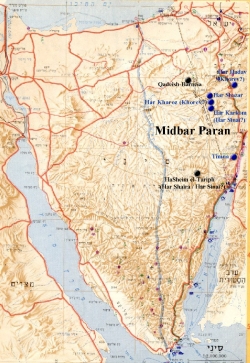
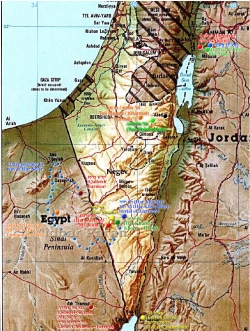 |  250x364.jpg "Map Israel (including Negev)") |
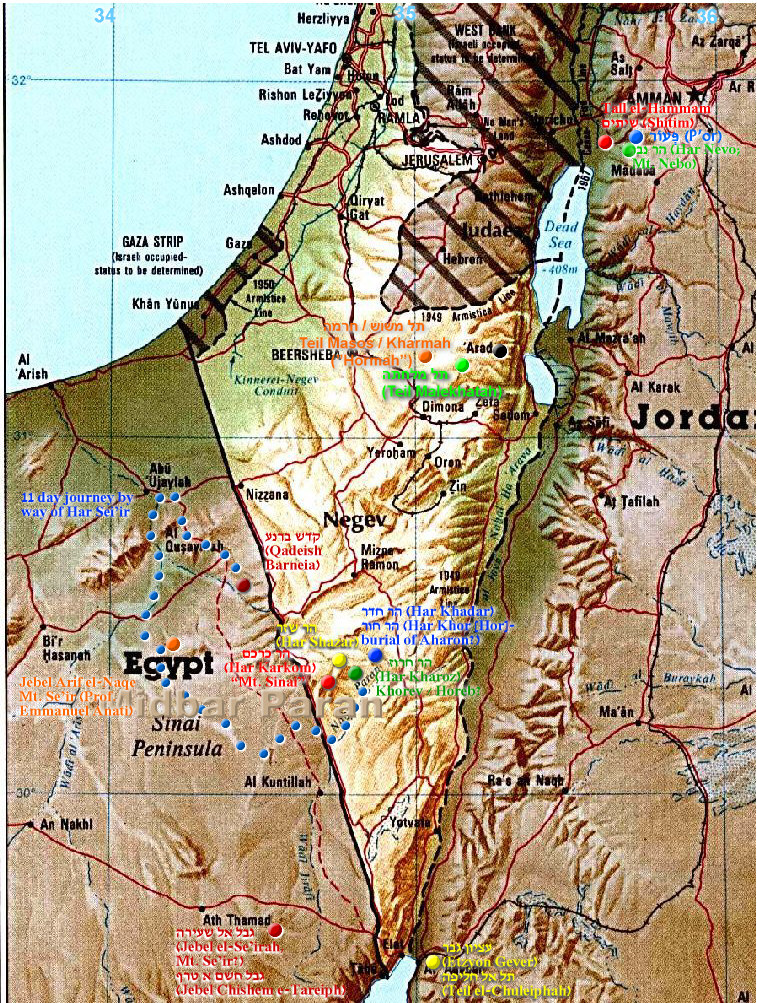 Eastern סִינַי & the NëgꞋ ëv of Yi•sᵊr•â•eilꞋ, showing the relationship between הַר כַּרְכֹּם (הַר סִינַי) and הַר חָרְמָה – "Eleven days from חֹרֵב by way of הַר-שֵׂעִיר to קָדֵשׁ בַּרְנֵעַ" (Dᵊvâr•imꞋ 1.2; follow blue dots around mountains, following wells & springs enroute). |  880x1280.jpg "Click to enlarge") Map: |
Earlier in this same përꞋëq, Mosh•ëhꞋ clearly stipulated that the mi•shᵊpât•imꞋ rendered by the Sho•phᵊt•imꞋ of the Bât•eiꞋ Din system he inaugurated (pᵊsuq•imꞋ 15-16 and the earlier passages to which these refer) is the mi•shᵊpâtꞋ of Ël•oh•imꞋ (pâ•suqꞋ 17). Logically, therefore, the Sho•phᵊt•imꞋ of the Bât•eiꞋ Din should be the פִּי י--ה—that harmonizes with a long list of corroborating Scriptures.
There are usually some elements in any group who are sanctimonious, corrupt and deserving of the severest condemnation. Rabbis are no exception. This, however, doesn't justify generalization to condemn the entire group. How prevalent are the זֵדִים we see everyday who arrogantly presume to know better than the "blind rabbis"—whom they generalize to all rabbis, Jews and our Bât•eiꞋ Din—and "rejected by god."
Everyday we see the זֵדִים placing their trust in their own intuition (eyes)—blasphemously calling "their own eyes" the "Holy Spirit"—climbing this mountain in diametric contradiction of the פִּי י--ה, yet proclaiming the same banner for their intuition (pâ•suqꞋ 41): "We shall climb it and do according to everything that פִּי י--ה has commanded us." The epitomy of זֵדִים.
In the A•mid•âhꞋ Mi•nᵊkhâhꞋ (No•sakhꞋ Teimân), the tᵊphil•âhꞋ is regularly recited that "the realm of the זֵדוֹן may You uproot and break, quickly, in our days."
This is all merely a restatement, and corroboration, of the same principle stated in the Shᵊm•aꞋ (specifically, bᵊ-Mi•dᵊbarꞋ 15.39-40), and the criteria set forth in Dᵊvâr•imꞋ 13.2-6 by which every person's actions are made apparent' "From the fruit the tree is known" (The Nᵊtzârim Reconstruction of Hebrew Matitᵊyâhu (NHM, in English) 12.33).
 |
 |
This pâ•râsh•âhꞋ begins אֵלֶה הַדְבָרִים
דְבָרִים here refers to the compilation and original codification, by MoshꞋëh, of the "Speakings," i.e. the corpus of Oral Law in contrast with the Asërët ha-Dibrot, accumulated by Yi•sᵊr•â•eilꞋ to that time.
דְבָרִים and דִּבְּרוֹת are the plural masc. and fem. noun forms, respectively, derived from the same verb we encounter so frequently: דִּבֵּר (e.g. pâ•suqꞋ 6) and וַיְדַבֵּר (e.g. 2.17). Contrary to most English translations, the connotation of speakings—spoken, oral sayings rather than the written "Word"—is then obvious.
Yet, translating דְבָרִים as "sayings" poses a different problem. The verb "to say / tell" in Hebrew is אָמַר (e.g. pᵊsuq•imꞋ 5 & 9).
Therefore, "speak(ings)," or "talk(s)", is a more accurate translation of דִּבֵּר while "say(ings)" or "tell(ings)" is a more accurate rendering for אָמַר
|
|
1.5 — Contrary to the implication of the phrase in the English translation of the Artscroll Stone Edition, punctuated only after the phrase "
הוֹאִיל מֹשֶׁה, בֵּאֵר, …
The etymological dictionary shows בּוֹר as an alternate spelling of בְּאֵר and בִּאֵר. This connection between digging or plumbing a pit or cistern and explaining implies an underlying metaphorical theme of digging a well or cistern of knowledge, plumbing the depths of some problem or idea. In this case, "
1.16 — records the establishment of the Beit-Din system and the Beit Din hâ-
In this same pâ•suqꞋ, the Hebrew underlying the English clause "the stranger that is with him" literally reads גֵּרוֹ – his resident-alien—implying a slave, employee or other subordinate. This description of a geir as subordinate within the Jewish community is another factor precluding the first century Christian image of gentile Christians taking over and developing their own form of "Displacement Judaism."
|
|
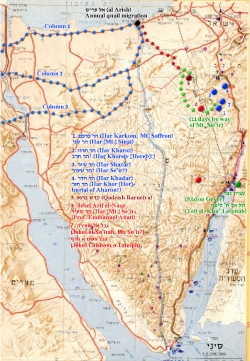 |
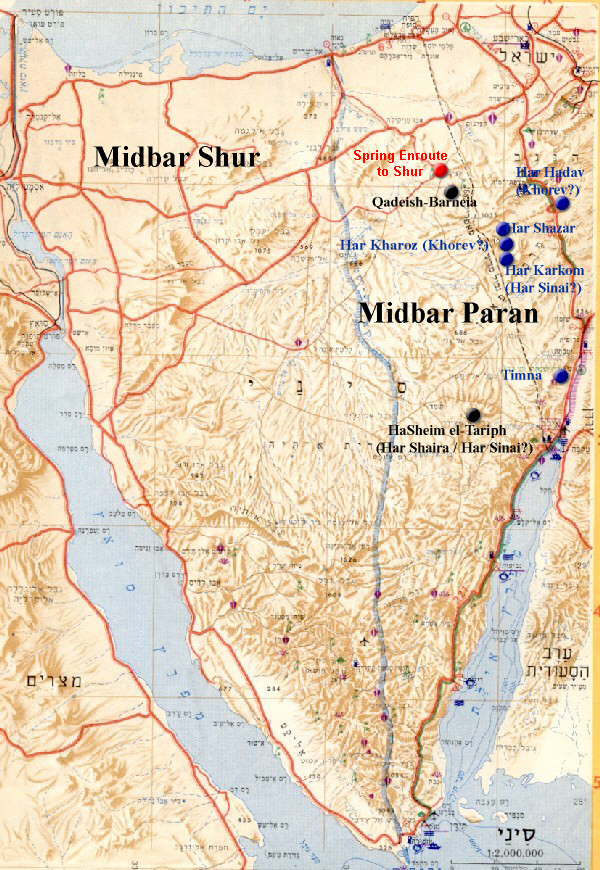
 Map: Sin• |
The portion of the route of the Yᵊtzi•âhꞋ described in Dᵊvâr•imꞋ 1.2, from חֹרֶב, in the area of מִדְבַּר פָּארָן (click map, then click second map to enlarge: 2, א'-ב'), via הַר שֵׂעִיר —probably garbled over the centuries to הַר שַׁזָּר (click map, then enlarge: 'א 2)—to
הַר חֹרֶב was one of several mountains in the סִינַי sometimes referred to simply as הַר סִינַי (inter alia Shᵊm•otꞋ 3.1; 17.6; 33.6; Dᵊvâr•imꞋ 1.2, 6, 19; 4.10, 15; 5.2; 9.8; 18.18; 28.69). These descriptions place הַר חֹרֶב near מִדְבַּר פָּארָן, thereby corroborating our identification of הַר סִינַי with הַר כַּרְכֹּם. If הַר חֹרֶב is identified with today's הַר חָדָב (click map, then click second map to enlarge: 2, 'א), this is also adjacent to מִדְבַּר פָּארָן, further corroborating this identification.
הַר כַּרְכֹּם is 50 km SSE of
 |
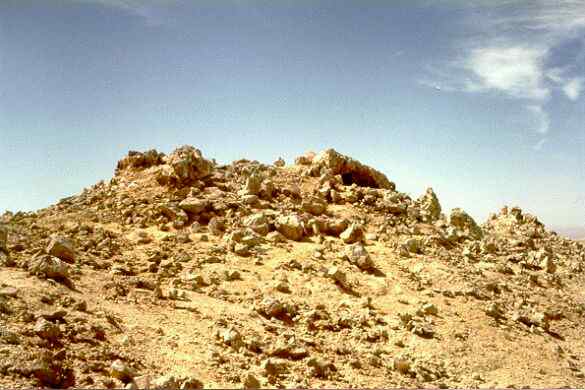 הַר סִינַי (i.e., הַר כַּרְכֹּם in the Israeli NëgꞋëv). Note cleft in rock at right of summit. There were 2-3 mountains in the סִינַי that were traditionally regarded as "Holy Mountains" by all of the peoples – and called "סִינַי." This is the "הַר סִינַי". |
 250x113.jpg "Har Sinai? (modern Ha-Sheim el Tariph or Jebel Shair, the Sinai)") |
 392x177.jpg "Click to enlarge") הַר סִינַי? Ha-Sheim ël Tâ•riphꞋ (adjacent to Jebel Sha•ir / Sei•irꞋ ) in the סִינַי |
מִדְבַּר פָּארָן is in the עֲרָבָה rift, about 75 km S of Yâm ha-
Attempting to place these events in the southern סִינַי peninsula, based solely on an entirely fictional, supposed 4th century gentile "Christian saint" and "martyred virgin" (Catherine of Alexandria), is incompatible with the Biblical description.
This week's pâ•râsh•âhꞋ takes place on Eleventhmonth 1 st, mid-winter, during the rainy season, forty years after the Yᵊtzi•âhꞋ (pâ•suqꞋ 3). Eleventhmonth is identified on modern Judaic calendars by the Babylonian-assimilated name: Shᵊvat (as in T"u bi-Shᵊvat), around the first month of the modern secular year.
 |
 Map: סִינַי, Mi•dᵊ |
When we have enough pilgrims, the Nᵊtzâr•imꞋ can organize Land Rover tours to visit all of these sites. Eventually, we would like to organize Nᵊtzâr•imꞋ note 23.23.2).
1.41 — "We have misstepped toward פִּי י--ה. We will go up [the mountain of the emori] and fight everyone whom פִּי י--ה our Ël•oh•imꞋ has ordered us as a mi•tzᵊw•âhꞋ."
Yet (1.45), when they went up the mountain of the Ëmor•imꞋ, the Ëmor•imꞋ chased the Israelis like bees, attacking them at הַר שֵׂעִיר, all the way to חָרְמָה
| Modern | 1QIsa | Middle-Semitic | Proto-Sinaitic |
|---|---|---|---|
| חָרְמָה |     |     |     |
| חֲרוֹז |   |   |   |
The table shows that a worn ms. could have mistaken one for the other in either the era of the
Question: How could people—Israelis—trying to fight for פִּי י--ה be routed? How could Ël•oh•imꞋ allow it?
Answer: they didn't hearken.
Rhetorical Questions: Is this also why the Sho•
The recon team, namely Yᵊho•shuꞋa Bën-Nun and Kâleiv Bën-Yᵊphunëh, had analyzed the weak points where Israel should attack. This intelligence, a matter of national security, would be kept secret as MoshꞋëh marshaled the Israeli forces to battle. But the Israeli army mutinied against Mosh•ëhꞋ, refusing to engage the enemy.
Mosh•ëhꞋ had little choice but to postpone the invasion to a future date. It is clear from subsequent events that Yᵊho•shuꞋa and Kâleiv were entrusted with the intelligence information that they would later put to use. Consequently, Mosh•ëhꞋ ordered that Israel turn around and head back into Mi•dᵊbarꞋ Sin•aiꞋ, along the northwestern coast of the Gulf of Eil•atꞋ (i.e. Yâm Suph).
It appears that the Israelis were motivated more by a dislike of returning to Mi•dᵊbarꞋ Sin•aiꞋ than a desire to serve פִּי י--ה It's questionable how worried they were about Mosh•ëhꞋ's words that their children, whom they thought would be prey to the
Does that line of reasoning sound like some modern evangelists and religious leaders who do all sorts of antinomian and un-halakhic things—purportedly in the Name? This is the definition of חִלּוּל י--ה, namely, חִלּוּל פִּי י--ה
But the Israelis weren't following Mosh•ëhꞋ, the authority ordained by פִּי י--ה—who happened (!) to have the intelligence analysis about where to attack, when and how. Mosh•ëhꞋ told them not to attack the mountain of the
|
|
1.15 — "So I took the heads of your tribes, men who were intelligent and well-known, and I gave them to you for heads over you, שַׂרֵי thousands, and שַׂרֵי hundreds and שַׂרֵי fifties and שַׂרֵי tens, and שֹׁטְרִים for your tribes."
Mosh•ëhꞋ reviews how he set up the Beit-Din system, including the שֹׁטְרִים. Interestingly, every min•yânꞋ had an appointed שַׂר. (It is the Beit-Din system that handed down the mi•shᵊpât•imꞋ, that developed into two schools of thought over the millennia:
Laity-centric: the Ha•lâkh•âhꞋ of the Pᵊrush•imꞋ.
(These topics may be researched in the index of our NHM.)
|
|
1.5 – הוֹאִיל מֹשֶׁה, בֵּאֵר, אֶת-הַתּוֹרָה הַזֹּאת לֵאמֹר:
The proper Hebrew term for "officer," a popular translation of 1.15, is קָצִין – not found in this passage.
1.16 – וָאֲצַוֶּה אֶת-שֹׁפְטֵיכֶם, … "
Note two things:
This is another confirmation that Mosh•ëhꞋ initiated the system of Oral Law under the Sho•phᵊt•imꞋ of Bat•eiꞋ-Din, who were charged with litigating matters of תּוֹרָה and
The term שֹׁפְטֵיכֶם derives from the
Students wishing to learn more about the stone-solid, historical and Scriptural basis for Ha•lâkh•âhꞋ, buried by Christians of the 2nd-4th centuries C.E., may study in our free, on-line, Distance Learning Khav•rutꞋâ.
|
|

| Setting: ca. B.C.E. 720 (Yᵊsha•yâhꞋu chapters 1-39). Location: Yᵊru•shâ•layꞋim (31° 47' N, 35° 13' E) |
|
In contrast to other traditions, according to No•sakhꞋ TeimânꞋ, the שַׁבָּת that precedes Tish•âꞋ bᵊ-Âv is called שַׁבָּת אֵיכָה, rather than שַׁבָּת חֲזוֹן (which was last week).
Consequently, this week's
First, we see that פִּי י--ה "refined" Israel (i.e., in the furnace of a "metal-refiner's fire" pâ•suqꞋ 25, hopefully not referring to anything worse than the Sho•âhꞋ).
Following the Sho•âhꞋ, "you" (
Next,
 |
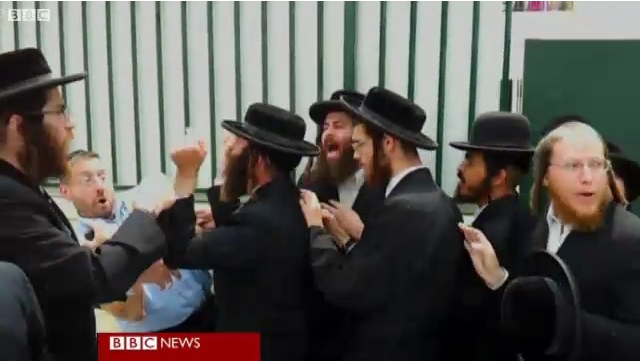 BBC video 2011.10.10 – Ultra-Orthodox Kha•reid•imꞋ spit on an eight year old Orthodox elementary schoolgirl, calling her a פְּרוּצָה (whore), a זוֹנָה (slut-prostitute) and a שיקצע or שיקסע" (assimilated German – namely, Yiddish – for "detestable goyah girl"); according to mother, Hadassah Margolis (dossim.com/ContentPage.aspx?item=352). They also assault an Orthodox rabbi (blue shirt) for being moderate – Beit ShëmꞋ ësh, Israel  |
Judging from today's khareid•imꞋ, who, too often, lack tzëdꞋëq even more than the law-abiding secular Jews they loathe, we have a long way to go yet.
 |
 Kha•reid•imꞋ : Death to the Internet |
United תּוֹרָה Judaism (Israeli Ultra-Orthodox political party) may be making overtures in the direction of cleaning their house, putting it in order, and making true tzᵊdâq•âhꞋ a reality in their practice. (2013 update: UTJ has proven no more committed to cleaning their house than other Ultra-Orthodox
Sha"s, by contrast, continues to resist tzᵊdâq•âhꞋ with all of the might it can muster.
Moderate (
1.27 – צִיּוֹן – בְּמִשְׁפָּט תִּפָּדֶה; וְשָׁבֶיהָ בִּצְדָקָה:
Here is the only Biblically-based recipe—not only for Israel's "salvation," but for personal "salvation" as well. Note that Yᵊsha•yâhꞋu ha-Nâ•viꞋ does NOT say: Tziy•onꞋ shall be redeemed through (lᵊ-ha•vᵊdilꞋ) Yësh"u, and her returnees through (lᵊ-ha•vᵊdilꞋ) "belief in the 'Lord' Jesus Christ, 'Son of the Living god' ".
Rather, Yᵊsha•yâhꞋu ha-Nâ•viꞋ declares unequivocally (and who would dare maintain that he contradicts himself elsewhere?): "Tziy•onꞋ shall be redeemed in mi•shᵊpâtꞋ and her returnees in tzᵊdâq•âhꞋ!
He who has ears לִשְׁמֹעַ – שְׁמַע!
|
|
In this week's
Adhering to the תַּבְנִית in תּוֹרָה (rather than contradicting it, as Christianity does) the genuine criteria for acceptance of Messianic expiation, as taught by RibꞋi Yᵊho•shuꞋa, is identical to the Mi•nᵊkhâhꞋ.
|
|
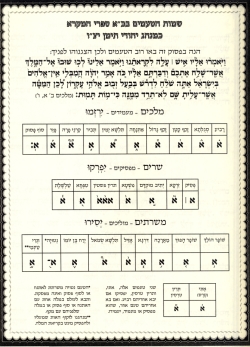
How often we've heard several pᵊsuq•imꞋ from this week's
But how often are such quotations accompanied by the essential context of the following explanatory pᵊsuq•imꞋ?
 |
 ha- |
1.13 — לֹא תוֹסִיפוּ is cantillated with a רָבִיעַ There is a short pause after this phrase, indicating the meaning "Don't add [to it]" (to the
The next word, הָבִיא, is the hiph•ilꞋ participle of בּוֹא, meaning "cause to come," i.e. "bring."
This is followed by מִנְחַת-שָׁוְא
This phrase is cantillated with זָקֵף קָטָן – a sustain sign, similar to a comma and completing a clause.
To this point, the pâ•suqꞋ reads, "Don't add [to already trampling My court – context], [then] bringing a vain Mi•nᵊkhâhꞋ, …"
Next, the phrase, קְטֹרֶת תּוֹעֵבָה, is concluded by a תְּבִיר, a disjunctive that is similar to, if there were such a thing in English, a semi-comma.
The phrase הִיא לִי is concluded by אַתְּנָחָא is similar to a semi-colon and marks the primary mid-point pause in a pâ•suqꞋ).
Hence, the first part of this pâ•suqꞋ reads: "Don't add to it, bringing a vain Mi•nᵊkhâhꞋ, a קְטֹרֶת תּוֹעֵבָה, is this to Me; …"
In this context, consider (yet again) how this corroborates Mi•shᵊl•eiꞋ Shᵊlom•oh′ 28.9.
The second half of the pâ•suqꞋ (following the primary mid-point pause cantillation mark) is more difficult to translate: "
The meaning of the pâ•suqꞋ, however, is clear: in the absence of tᵊshuv•âhꞋ and תּוֹרָה-observance, ritual-qor•bânꞋ and ritual-observance are vain, and a תּוֹעֵבָה – again corroborating Mi•shᵊl•eiꞋ Shᵊlom•oh′ 28.9.
This is corroborated in pᵊsuq•imꞋ 14-17—in which we find the command דִּרְשׁוּ מִשְׁפָּט
Only then do we finally read in pâ•suqꞋ 18, " 'Let's go, prithee, וְנִוָּכְחָה,' shall י--ה say" – implying a session of the heavenly, eternal, Beit-Din.
|
|
In the
Tziy•onꞋ shall be ransomed in mi•shᵊpâtꞋ and her settlers/inhabitants [shall be ransomed] בִּצְדָקָה
|
|
This week's
Whenever qor•bân•otꞋ weren't accompanied by genuine tᵊshuv•âhꞋ, then (1.15) "even if you offer a multitude of תְפִלָּה, I won't bear you."
 250x165.jpg "Tolaat shani (crimson worm, Coccus ilicis)") |
 640x423.jpg "Click to enlarge") תּוֹלַעַת שָׁנִי |
The sole remedy is (1.16) רַחֲצוּ! Clear yourself! Turn aside from your wrongdoings before My eyes. Stop the wrong. (17) Learn the good thing: דִּרְשׁוּ מִשְׁפָּט, אַשְּׁרוּ חָמוֹץ; שִׁפְטוּ יָתוֹם, רִיבוּ אַלְמָנָה
(1:18) "Let's go, prithee, וְנִוָּכְחָה, shall י--ה say. If your missteps be like crimson they shall become white as snow. If they have become red like the crimson-insect, they shall become like wool.
If you acquiesce and hearken תֹּאכֵלוּ the good of the land, but if you refuse and rebel תְּאֻכְּלוּ by the sword, for פִּי י--ה has spoken."
|
|
| Nᵊviy•imꞋ | Translation | Mid•râshꞋ RibꞋi Yᵊho•shuꞋa (NHM) |
NHM |
||||||||
|---|---|---|---|---|---|---|---|---|---|---|---|
| Yᵊsha•yâhꞋu 2.2 | Then it will be in the latter days, nâ•khonꞋ shall be the Har Beit 'ה in the rosh of har•imꞋ, and higher than the hills… | You are the or 4.16.0 of the legions, 4.8.1 an ir 2.23.0 laid-out on a hill unable to be hidden. | NHM 5.14 |
||||||||
| Yᵊsha•yâhꞋu 1.15-16 | When you spread your hands [in prayer], My Eyes will overlook you; also, if you enlarge your tᵊphil•âhꞋ I'll not be hearkening —your hands are full of blood. 16 Rinse yourselves, sprinkle yourselves, eliminate the roꞋa of your obdurateness from against My Eyes; cease hâ•reiꞋa. | In the hour you tit•pa•l ᵊl•uꞋ 5.44.2 don’t raise your voice, and don’t be like the mournful hypocrites 23.13.2 who show an affection 6.5.1 le-hitpaleil 5.44.2 with lofty words in the B?tei-ha-K’n?s?t 4.23.2 and in the corner of the courtyards, and mit•pa•l ᵊl•imꞋ 5.44.2 so that persons 8.20.2 will hear and praise them. Ä•meinꞋ! I tell you, they obviate 6.2.1 their payment. When you tit•pa•l ᵊl•uꞋ, 5.44.2 go to your private niche 6.6.1 and close your door behind you. Tit•pa•l ᵊl•uꞋ 5.44.2 to your Father in secret, and your Father, who beholds in secret, shall render your payment. When you tit•pa•l ᵊl•uꞋ 5.44.2 don’t be long-winded 6.7.0 like the hypocrites 6.7.1 who think they will be heard through long-windedness. 6.7.2 Don't you see that your Father who is in the heavens knows your words before you ask 23.22.1 Him? Therefore, you tit•pa•l ᵊl•uꞋ 5.44.2 thusly: 21.22.2
6.9.1 אָבִינוּ שֶׁבַּשָׁמַיִם |
NHM 6.7 |
||||||||
|
Oy 23.23.1 for you, So•phᵊr•imꞋ 5.20.0 and those of the [probably Boethusian ‘Herodian’ 22.16.1] Rabbinic-Perushim sect of Judaism 23.25.1 who advocate that Halâkh•âhꞋ 7.1.1 must be exclusively oral 3.7.1—hypocrites,23.13.2 because you tithe 23.23.2 the mint, the dill and the cumin 23.23.3 while you let 23.23.4 the more kâ•vodꞋ 5.16.2 things of תּוֹרָה 5.17.1 go: adjudication-of-Halâkh•âhꞋ,23.23.5 khësꞋëd,12.7.1 and ëm•un•âhꞋ.23.23.6 It logically follows that you should do these things as well,23.23.7 not let 23.23.8 them 23.23.9 go. 24 You are blind leaders who thoroughly strain out the gnat from a cup and then swallow the camel.23.24.1 | NHM 23.23-24 |
|||||||||
|
|
Ta•lᵊmid•imꞋ should note that Dᵊvâr•imꞋ 1.16 (see the תּוֹרָה section, 5752) confirms the exclusivity that Mosh•ëhꞋ implies in his use of the phrases "between brothers" and "between a man and his brother". Mosh•ëhꞋ uses the term "brother" to denote a fellow-Israeli (which, even then, included geir•imꞋ).
As one should expect, the term is used identically in NHM by RibꞋi Yᵊho•shuꞋa.
Consequently, excepting Yᵊhud•imꞋ (recognized by a
Aside from describing literal brothers, RibꞋi Yᵊho•shuꞋa used the figurative meaning of brother exclusively to refer to fellow Jews, in the Jewish community (for details, consult the cited passages in NHM):
NHM 5.46 If you will inquire into the well-being of your brother you do a great khësꞋëd
NHM 7.2-5 Hypocrite! First, get the beam out of your own eye and then you will be able to see clearly enough to remove the speck of straw from the eye of your brother
NHM 10.21 Brother will inform on brother
NHM 18.15-18 If your brother missteps
NHM 18.21 how often shall my brother misstep
NHM 23.8 Don't wish to be called RibꞋi, for you have one Tan•âꞋ and you are all brothers.
NHM 28.10 announce to my brothers that they should go away into the Gâ•lilꞋ'
|
|
•marꞋ Rab•ahꞋ Bar Bar-Khan•âhꞋ, •marꞋ RabꞋi Yo•khân•ânꞋ, 300 liters [lit. 40 sᵊah] of chopped-up tᵊphil•inꞋ were found [attributable to] the head of the killers of Beitar. Rabi Yanai in [the name of] RabꞋi Yishma•eil said, Three fund-boxes of 300 liters. A Bârâiytâ taught: 300 fund-boxes of 1 liter [lit. three sᵊah]. This isn't a contradiction, this is the first [state] and that is its complement.

|
|
|
 250x188.jpg "Tel Masos (Khormah, bibleage.com)")
 706x531.jpg "Click to enlarge")


